What this buffer does that a transceiver cannot
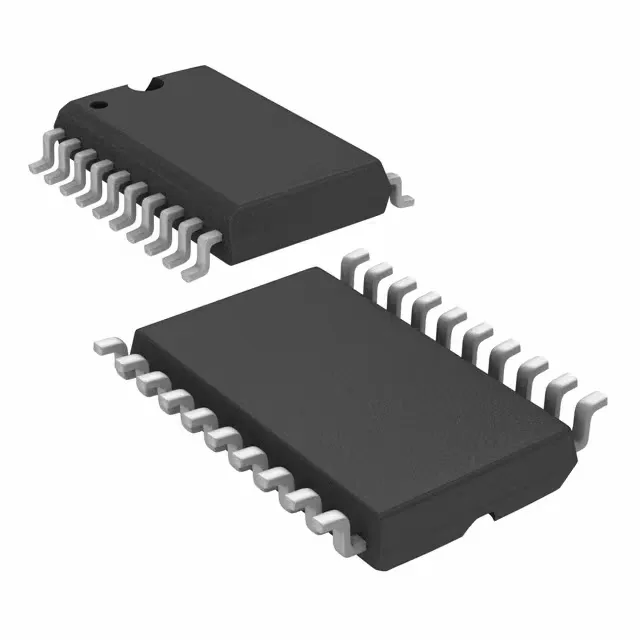
The Texas Instruments CD74HC241M is a non-inverting buffer with 3-state outputs, organised as two independent 4-bit elements in a single 20-SOIC package. Unlike a transceiver, this part buffers in one direction only — there is no bidirectional data path. That makes it the right choice when you need to isolate a unidirectional bus, drive a high-fan-out clock or control line, or add a clean 3-state isolation stage between a microcontroller peripheral and a shared backplane. The 3-state outputs let multiple devices share the same bus lines without contention: when the output enable is inactive, the pins go high-impedance and the bus floats.
Supply range and temperature — where this part survives
Rated for 2V to 6V supply, the CD74HC241M works across 3.3V and 5V logic domains without a level translator, as long as the input thresholds are compatible.
Output drive — what 7.8 mA buys you
It drives one or two standard LSTTL loads or a handful of CMOS inputs, but it will not directly drive a relay coil, an LED indicator without a series resistor, or a long unterminated cable. For those loads, plan on a discrete transistor or a dedicated line driver after the buffer. The symmetric drive (equal source and sink) simplifies timing analysis — rise and fall times match closely, which matters for clock distribution and strobe signals.
It is a surface-mount part, so the board needs reflow assembly — no through-hole option exists for this order code.