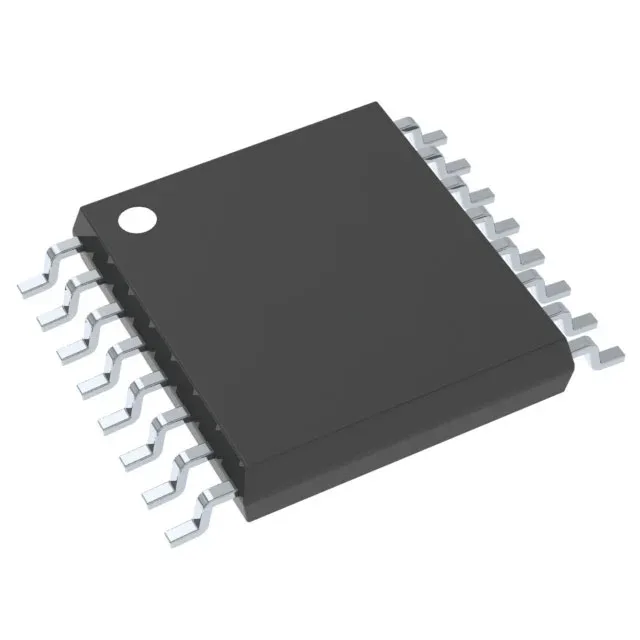
Texas Instruments CD4511BPWR — Logic ICs

CD4511BPWR BCD-to-7-Segment LED Driver, 3V~18V, -55°C~125°C

MPNCD4511BPWR
End of Life

Texas Instruments CD4511BPWR, BCD-to-7-segment latch/decoder/driver for LED displays, 3V~18V supply, 40 nA quiescent current, -55°C~125°C, 16-TSSOP package.

$0.88Ref. price · indicative, final on quote
Packaging16-TSSOP (0.173", 4.40mm Width)
RoHSROHS3 Compliant
Independent supplier — new & surplus stockAuthenticity-screened · ESD-safe packingListing updated Aug 2026

Specifications

CD4511BPWR specifications
ParameterValue
Display typeLED
MountingSurface Mount
Supply voltage3V ~ 18V
Current - supply40 nA
InterfaceBCD
Operating temperature-55°C ~ 125°C
PackageTape & Reel (TR); Cut Tape (CT)
Configuration7 Segment
Case16-TSSOP (0.173\", 4.40mm Width)

Product details

The Texas Instruments CD4511BPWR is a BCD-to-7-segment latch/decoder/driver designed to drive common-cathode LED displays. It accepts a 4-bit BCD input and drives the corresponding seven-segment pattern, with a built-in latch to hold the displayed value. The 40 nA typical supply current makes it suitable for battery-backed or always-on display modules where every microamp counts. The wide 3V to 18V supply range lets it interface directly with 5V, 12V, or 15V logic systems without level shifting.

The CD4511BPWR comes in a 16-TSSOP package with a 4.40 mm body width and 0.65 mm lead pitch — a compact surface-mount footprint that saves board area compared to the DIP version. The "PWR" suffix indicates Tape & Reel (TR) or Cut Tape (CT) delivery, which is the standard for pick-and-place assembly. If your rework station is set up for fine-pitch TSSOP, the hot-air profile is straightforward; just watch the MSL level on the reel label before reflow.

Frequently asked questions

Is CD4511BPWR equivalent to CD4511BE?

The CD4511BPWR and CD4511BE share the same BCD-to-7-segment decoder/driver function and electrical specifications, but the BPWR is in a 16-TSSOP surface-mount package while the BE is in a 16-pin DIP. They are not pin-compatible for the same PCB footprint.