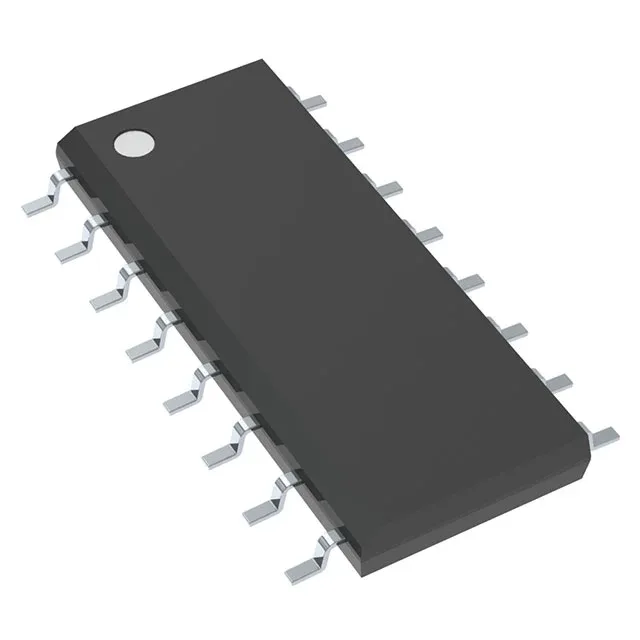
Texas Instruments CD4015BMT — Logic ICs

CD4015BMT Dual 4-Bit Static Shift Register, 3V-18V

MPNCD4015BMT
End of Life

Texas Instruments CD4015BMT, 4000B series, dual 4-bit static shift register, serial-to-parallel, push-pull outputs, 3V to 18V supply, -55°C to 125°C, 16-SOIC surface mount.

$1.11Ref. price · indicative, final on quote
Packaging16-SOIC (0.154", 3.90mm Width)
RoHSROHS3 Compliant
Series4000B
Independent supplier — new & surplus stockAuthenticity-screened · ESD-safe packingListing updated Aug 2026

Specifications

CD4015BMT specifications
ParameterValue
Series4000B
Logic typeShift Register
Output typePush-Pull
MountingSurface Mount
Supply voltage3V ~ 18V
Operating temperature-55°C ~ 125°C
PackageTape & Reel (TR); Cut Tape (CT)
FunctionSerial to Parallel
Case16-SOIC (0.154\", 3.90mm Width)
Number of elements2
Number of bits per element4

Product details

What this dual 4-bit shift register does on your board

The Texas Instruments CD4015BMT is a 4000B-series CMOS dual 4-bit static shift register. It takes serial data in and delivers parallel outputs from each of its two independent 4-bit stages, with push-pull outputs that drive logic loads directly. The wide supply range from 3V to 18V lets it interface with 5V TTL, 12V industrial logic, or 3.3V microcontrollers without level translation, making it a common choice for expanding digital I/O on a motor-drive control board or a PLC input module.

Supply voltage and temperature — the real-world fit

Supply range is 3V to 18V; temperature range is -55°C to 125°C.

Package and mounting — 16-SOIC footprint

Housed in a 16-SOIC (0.154", 3.90mm width) surface-mount package, the CD4015BMT fits a standard SOIC-16 land pattern. The supplier device package is 16-SOIC, so your existing footprint for a 16-pin SOIC shift register works without a layout change.

Frequently asked questions

What is the difference between CD4015BMT and CD4015BE?

The CD4015BMT is the surface-mount 16-SOIC variant, while the CD4015BE is the through-hole DIP version. Function and electrical specs are identical — the choice is footprint and assembly process.