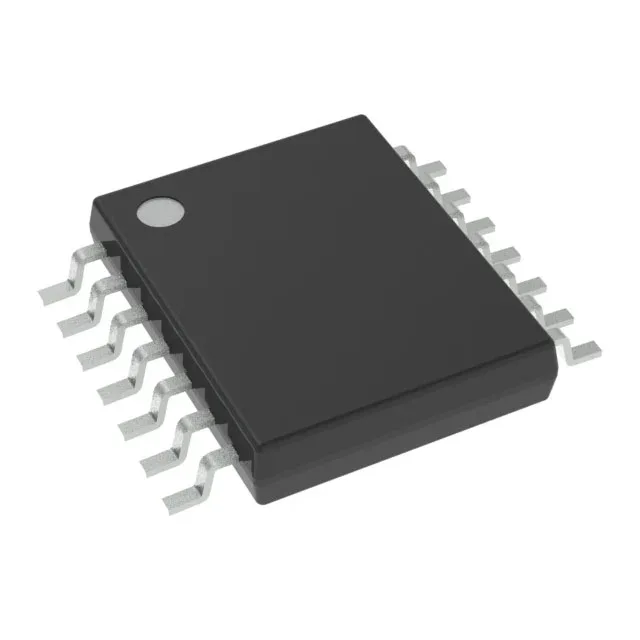
Texas Instruments CD4013BPWR — Logic ICs

CD4013BPWR D-Type Flip-Flop, 24 MHz, 3V-18V, 14-TSSOP

MPNCD4013BPWR
Active

Texas Instruments 4000B series CD4013BPWR, D-Type flip-flop, dual 1-bit, positive-edge triggered, complementary outputs, 24 MHz clock, 3V to 18V supply, -55°C to 125°C, 14-TSSOP.

$0.5800Ref. price · indicative, final on quote
Packaging14-TSSOP (0.173", 4.40mm Width)
RoHSROHS3 Compliant
Series4000B
Independent supplier — new & surplus stockAuthenticity-screened · ESD-safe packingListing updated Aug 2026

Specifications

CD4013BPWR specifications
ParameterValue
TypeD-Type
Series4000B
Output typeComplementary
Trigger typePositive Edge
MountingSurface Mount
Supply voltage3V ~ 18V
Current - quiescent4 µA
Current - output high, low6.8mA, 6.8mA
Clock frequency24 MHz
Operating temperature-55°C~125°C(TA)
PackageTape & Reel (TR); Cut Tape (CT)
FunctionSet(Preset) and Reset
Case14-TSSOP (0.173\", 4.40mm Width)
Input capacitance5 pF
Number of elements2
Number of bits per element1
Max propagation delay @ v, max CL90ns @ 15V, 50pF

Product details

24 MHz toggle rate on a 3V to 18V rail

It clocks at 24 MHz on a positive edge, making it fast enough for moderate-speed control logic, debounce circuits, and frequency dividers in systems that need to run across a wide supply range. The 3V to 18V supply span is the hallmark of the 4000B family — it lets this part interface directly with 5V TTL, 12V industrial logic, or 15V analog rails without a level translator. Quiescent current sits at 4 µA typical, so it adds negligible draw in battery-backed or always-on sections. Outputs are complementary (Q and Q-bar), each sourcing or sinking 6.8 mA. Propagation delay is 90 ns at 15V with a 50 pF load, which sets the timing budget for cascaded stages.

Frequently asked questions

Does CD4013BPWR replace the CD4013BE?

The CD4013BPWR is the surface-mount (14-TSSOP) variant of the same CD4013 die. The CD4013BE is the through-hole (PDIP) version. Functionally identical — same dual D-type flip-flop with set/reset, same 3V-18V range, same 24 MHz clock. The choice is footprint and assembly process, not logic performance.