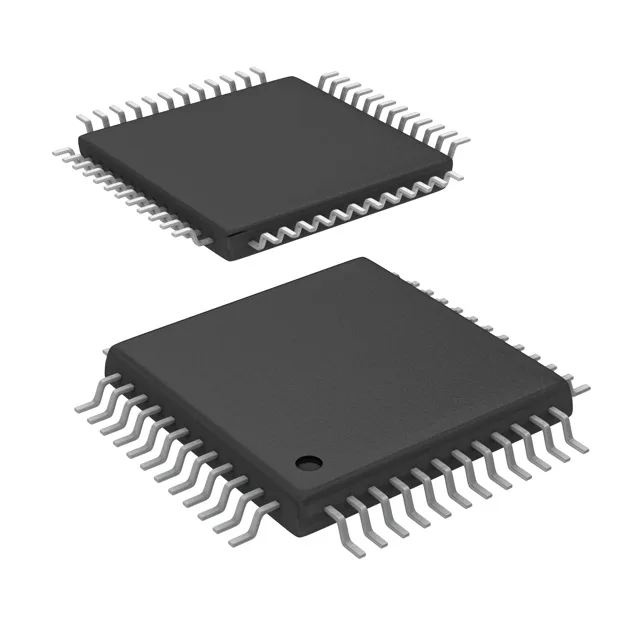
BQ769142PFBR

Texas Instruments

Texas Instruments BQ769142PFBR, Multi-Function Battery Monitor Controller, I²C, 3 ~ 14 Cells, Lithium Ion/Polymer, Over/Under Voltage Protection, -40°C ~ 85°C, 48-TQFP (7x7), Surface Mount.

Texas Instruments BQ769142PFBR
Download datasheet (PDF)
[IN STOCK] In Stock: 1 pcs
$7.19/ pc

Volume pricing

Buy Now

MOQ 1 · Tape & Reel (TR); Cut Tape (CT) · RoHS · EIA-481 · DAP/DDP · T/T

Technical specifications

BQ769142PFBR specifications
Parameter / AttributeSpecification / Value
MountingSurface Mount
InterfaceI²C
Operating temperature-40°C ~ 85°C (TA)
PackageTape & Reel (TR); Cut Tape (CT)
FunctionMulti-Function Controller
Case48-TQFP
Number of cells3 ~ 14
Fault protectionOver/Under Voltage
Battery chemistryLithium Ion/Polymer
100% Footprint Match · Solder-Ready (No PCB Redesign Needed)

Need Stock or a Drop-in Second-Source for BQ769142PFBR?

Package: TQFP-48 · Pin-compatible replacements with immediate Shenzhen spot stock

Footprint Match 97%
Supply Chain & Allocation Reality:

The BQ769x2 family is the monitor-and-protection core of current battery designs - power tools, e-bikes, ESS, portable medical - and one of the few families where the replacement story is genuinely comfortable: BQ76942, BQ769142, BQ76952 and BQ76972 are pin-equivalent siblings cut for different cell counts, with TI application notes documenting the limited component changes between them. The hard boundary is generational: the older BQ769x0 parts (BQ76920/30/40) are a different package, different accuracy, different protection architecture - and the mix-up across that boundary is the classic BMS bill-of-materials accident.

Verified Pin-Compatible Replacements (3 verified alternatives)

BQ76942 Texas Instruments TQFP-48
Pin-to-Pin (Minor Clock/Init Tuning)
Availability & Target Pricing:

The 10S Member of the Same Die Family

Shenzhen Spot Stock (24-48h Dispatch)

Electrical & Core Specs:

Pin-equivalent sibling for packs to 10S: same TQFP-48 body, same feature architecture (16/24-bit ADC, high-side NFET drivers, dual LDOs, I2C/SPI/HDQ, autonomous protection, balancing) cut for fewer cells.

Cell-input ceiling about 55V against 80V on the 16S parts - the structural difference between the members.

Compatibility & Drop-In Notes: Crossing between x2 members is limited-component-change work, not a blind swap: the configuration (cell count, protection thresholds, OTP) is part of the design, and the unused top inputs are wired per the specific member. TI application notes provide the pin-equivalence map.
Package & Solder Footprint: Same TQFP-48 land pattern; verify the top-cell wiring against the target member.
Shenzhen Warehouse Stock & MOQ: Active TI lines; stocked against growing cell-count demand (ESS and e-mobility runs).
BQ76972 Texas Instruments TQFP-48
Pin-to-Pin (Minor Clock/Init Tuning)
Availability & Target Pricing:

The Accuracy Grade

Shenzhen Spot Stock (24-48h Dispatch)

Electrical & Core Specs:

The 16S member with the tighter cell-voltage measurement (about 3mV against 5mV): the meter-grade part of the family for designs where SOC accuracy and per-cell tracking pay for the grade.

Same 16S / 80V-class input envelope.

Compatibility & Drop-In Notes: In certified designs the accuracy grade is part of the approval file: substituting the looser grade into a certified pack changes the documentation, not just the part. Grade for grade.
Package & Solder Footprint: Pin-equivalent TQFP-48 across the x2 family.
Shenzhen Warehouse Stock & MOQ: Stocked as the premium grade; verify markings - BMS parts are hot relabel targets.
BQ76940 Texas Instruments TSSOP-30
Functional Equivalent
Availability & Target Pricing:

The x0 Generation - A Different Board

Shenzhen Spot Stock (24-48h Dispatch)

Electrical & Core Specs:

The older generation (BQ76920/30/40 for 3-15S): lower measurement accuracy (±10mV class), slower refresh, low-side FET drive, MCU recovery in protection flow - a different architecture in a different package.

Different cell ceilings and a single 3.3V LDO against the dual programmable LDOs of the x2 generation.

Compatibility & Drop-In Notes: The generational boundary: x0 and x2 share a name prefix and nothing electrical. Legacy tool packs with x0 designs repair within the x0 parts; modernization to x2 is a full board and firmware project with real benefits (synchronized V/I, autonomous protection, 63ms refresh).
Package & Solder Footprint: TSSOP-30 against the x2 TQFP-48 - different footprint by construction.
Shenzhen Warehouse Stock & MOQ: Stocked for repair of the legacy tool/BMS generation; inspect lots carefully (long-lived platform, active gray market).
Buyer & Quality Checklist for Sourcing Alternatives
  • The x2 ladder is pin-equivalent with limited changes - but not free: the top-cell input wiring, configuration/OTP and protection thresholds follow the member. Use the TI pin-equivalence application note as the migration checklist.
  • The x0 boundary is hard: TSSOP-30 against TQFP-48, different sense accuracy, different FET drive side, different protection autonomy. Nothing crosses it by substitution.
  • Cell-input ceiling follows the member (about 55V for 10S parts, 80V for 16S): stack-voltage arithmetic before part number, always.
  • In certified battery packs the measurement grade (5mV class BQ76952 versus 3mV class BQ76972) belongs to the approval file - substituting across grades is a compliance action, not a sourcing shortcut.
  • These parts pair with the familiar sourcing discipline for a reason: BMS ICs trade at prices where relabeling pays. Date codes, tape, and photographed markings before dispatch; decap/X-ray for high-value lots from unknown sources.
  • Design-in pairings to keep on one order: the sense resistors, the pack-side FETs, and the isolation - a BMS repair that fixes the monitor and ignores the FETs re-fails at the next fault event.
Frequently Asked Technical Questions

Q: Is BQ76952 pin-compatible with BQ76942?

A: They are pin-equivalent siblings in the same TQFP-48, cut for different cell counts (10S against 16S). TI documents the limited component changes - the top-cell input pin and configuration differ, so treat it as a documented migration, not a blind swap.

Q: Can I replace a BQ76940 with a BQ76952?

A: No - the x0 generation (BQ76920/30/40) and the x2 family share only a name prefix: different package, accuracy class, FET drive architecture and protection autonomy. Moving from x0 to x2 is a board and firmware redesign with real benefits - planned work, not a repair substitution.

Q: What is the difference between BQ76952 and BQ76972?

A: Measurement grade: the 76972 tightens cell-voltage accuracy to about 3mV against 5mV for the 76952, on the same 16S architecture. In certified packs that grade is part of the approval file.

Technical details

Battery monitor for 3-to-14-cell Li-ion packs

The Texas Instruments BQ769142PFBR is a multi-function battery monitor controller designed for 3-to-14-cell series lithium-ion and lithium-polymer battery packs. It integrates over-voltage and under-voltage fault protection, communicates over an I²C interface, and is packaged in a 48-TQFP (7x7 mm) for surface-mount assembly.

Cell-count flexibility and fault protection

The 3-to-14-cell range is the primary selection parameter: a 7-cell pack and a 13-cell pack both fall within the same BOM line, simplifying inventory for a product family that scales stack voltage. The integrated over/under-voltage fault protection means the controller can independently trigger a protection FET or alarm without waiting for the host MCU, which reduces software latency in a fault event.

I²C interface and host communication

The I²C interface is used for configuring protection thresholds, reading cell voltages, and reporting fault status. This is a standard two-wire bus that any MCU with an I²C peripheral can talk to, so no special protocol license or dedicated SPI port is needed. For a firmware engineer, the first-power check is confirming the I²C address and that the bus pull-ups are sized for the bus capacitance of the 48-TQFP package.

Active lifecycle — no EOL risk for new designs

For a BOM cost engineer, this also means dual-sourcing is possible through multiple distribution legs, reducing single-source exposure.

The 48-TQFP (7x7 mm) package has a 0.5 mm pitch, which is inspectable under a standard microscope and reworkable with a hot-air station.

Compatibility with lithium polymer chemistry

The battery chemistry is specified as lithium ion/polymer, so the BQ769142PFBR is directly compatible with lithium polymer pouch cells. The same over/under-voltage thresholds can be configured for the typical 4.2 V/cell full-charge and 2.8-3.0 V/cell cut-off voltages used with LiPo packs. No external level shifting or chemistry-specific front-end is required.

BQ769142PFBR
[ALLOC] verified
Quote