What the protection thresholds mean for your pack design
The BQ29707DSER is a single-cell Li-Ion or Li-Polymer battery protection IC that monitors over-current, over-voltage, under-voltage, and short-circuit conditions. For a 1-cell pack, the over-voltage threshold typically trips around 4.3 V to prevent cell damage during charging, while the under-voltage lockout cuts the load at roughly 2.5 V to avoid deep discharge. The over-current detection range is set by external resistors — the IC itself provides the comparator and timing, so the actual trip point is a design choice, not a fixed number. A pack that sees a cold warehouse floor at -20°C or a hot dashboard at 70°C stays within the rated envelope.
Active production and compliance
The ROHS3 status means it meets the latest EU restriction limits, including the four phthalates added in 2015.
Package options for prototype vs volume
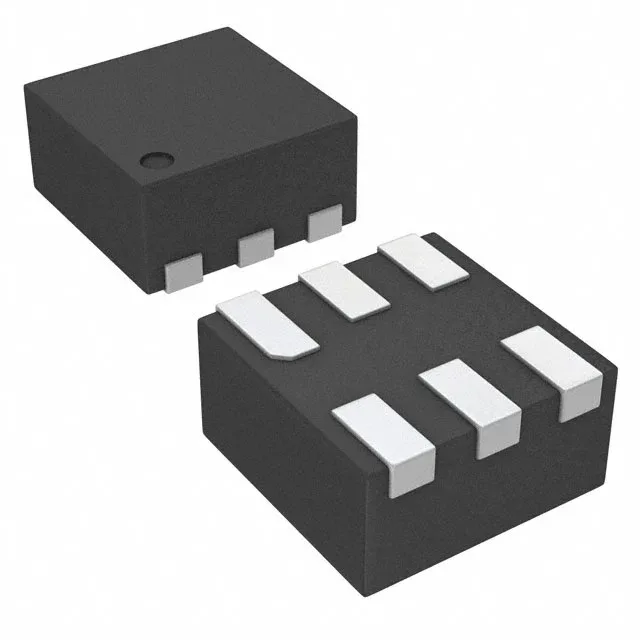
The IC is offered in both Tape & Reel (TR) for automated pick-and-place and Cut Tape (CT) for small-quantity prototyping. The 6-WFDFN package (also called 6-WSON with a 1.5x1.5 mm body) has a 0.5 mm pitch — fine enough that a standard soldering iron works, but a hot-air rework station makes placement easier. The exposed pad on the bottom must be soldered to a PCB thermal land for proper heat sinking; the datasheet recommends a 2.0x2.0 mm pad with four vias to the ground plane.