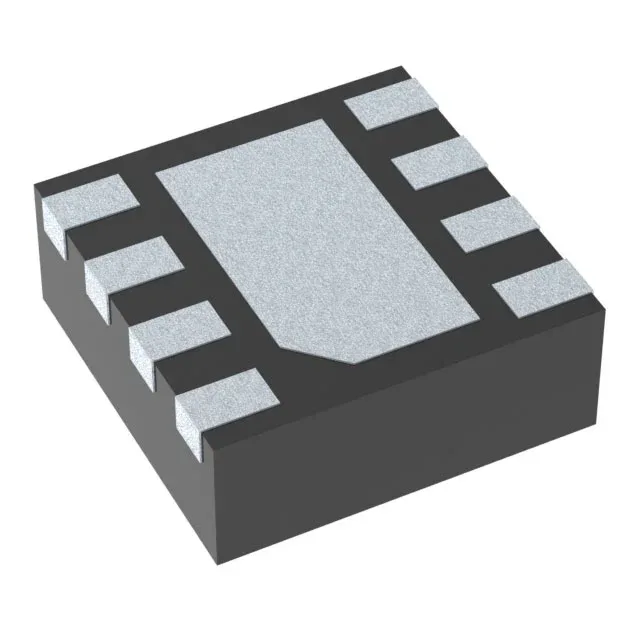
Battery protection IC for 2-4 cell Li-Ion packs
The Texas Instruments BQ294704DSGT is a battery protection IC designed for Lithium-Ion packs with 2 to 4 series cells. Its primary function is over-voltage fault protection — it monitors each cell voltage and triggers a shutdown when any cell exceeds the over-voltage threshold, preventing cell damage or thermal runaway. Housed in an 8-WFDFN exposed pad package (supplier device package 8-WSON 2x2 mm), it is a surface-mount component suited for compact battery management system (BMS) PCBs where board space is tight.
Active production — no LTB window to track
For a procurement desk, this means no urgency to stockpile or scramble for end-of-life inventory. The part can be specified into new designs without worrying about an imminent EOL notice.
Over-voltage protection — what the fault trigger means on the bench
The BQ294704DSGT monitors each series cell in a 2-to-4-cell Li-Ion stack. When any cell voltage exceeds the factory-set over-voltage threshold, the IC asserts a fault output that can drive an external FET to disconnect the pack from the charger or load. This is the primary protection mechanism against over-charge, which is the dominant failure mode in Li-Ion packs. The 110°C upper limit is above typical Li-Ion cell operating temperatures (usually 60-85°C), so the IC itself is not the thermal bottleneck in the BMS design.
The 8-WFDFN exposed pad package (8-WSON, 2x2 mm body) requires a thermal pad on the PCB for adequate heat dissipation. The exposed pad is typically connected to the ground plane. The 0.5 mm pitch is fine-pitch but hand-solderable with a hot-air rework station — the pad geometry is standard for this package class.