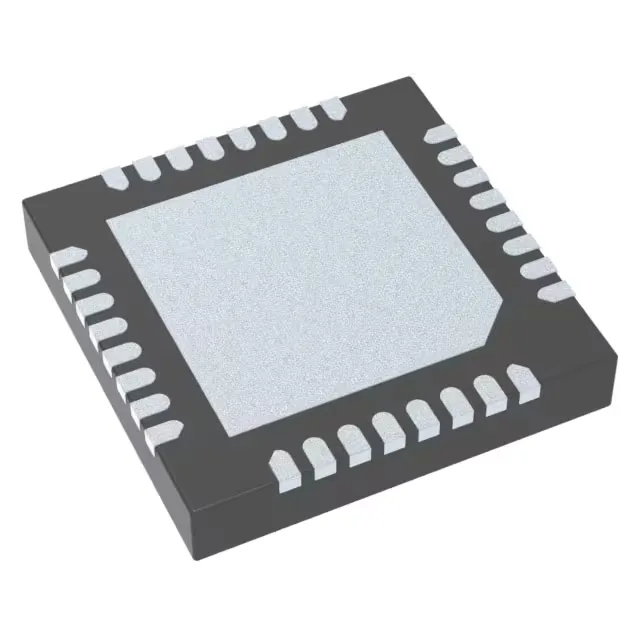
Texas Instruments BQ25731RSNR — Power Management (PMIC / Gate Driver)

BQ25731RSNR I²C Buck-Boost Battery Charger, 16.2A Max

MPNBQ25731RSNR
Active

Texas Instruments BQ25731RSNR, I²C-controlled NVDC buck-boost battery charger, 1-5 cell multi-chemistry, 16.2A max charge current, 26V max supply, 32-WFQFN Exposed Pad, -40°C to 85°C.

$3.7900Ref. price · indicative, final on quote
Packaging32-WFQFN Exposed Pad
RoHSROHS3 Compliant
Independent supplier — new & surplus stockAuthenticity-screened · ESD-safe packingListing updated Aug 2026

Specifications

BQ25731RSNR specifications
ParameterValue
MountingSurface Mount
Battery pack voltage9V ~ 12.6V
Supply voltage26V
Current - chargingConstant - Programmable
Charge current - max16.2A
InterfaceI²C
Operating temperature-40°C~85°C
PackageTape & Reel (TR); Cut Tape (CT)
Case32-WFQFN Exposed Pad
Number of cells1 ~ 5
Fault protectionOver Current, Over Temperature, Over Voltage
Battery chemistryMulti-Chemistry
Programmable featuresCurrent, Voltage

Product details

Buck-boost charger with I²C programmability for 1-5 cell packs

The Texas Instruments BQ25731RSNR is an I²C-controlled, NVDC (narrow-voltage DC) buck-boost battery charger designed for multi-chemistry battery packs of 1 to 5 series cells. The charger integrates over-current, over-temperature, and over-voltage fault protection, and is packaged in a 32-pin WFQFN with exposed pad for thermal management.

16.2A charge current — sizing the power stage

The 16.2A maximum charge current is the headline rating for this part. That level of current targets battery packs in the 2-5 cell range where fast charging is required. The constant-current programming is set via I²C, so the charge profile can be adjusted in firmware without a resistor change.

Frequently asked questions

Does BQ25731RSNR support 1-cell batteries?

Yes, the BQ25731RSNR supports 1 to 5 series cells, covering 1-cell Li-ion packs as well as higher-voltage configurations.

Is BQ25731RSNR a buck-boost charger?

Yes, the BQ25731RSNR is a buck-boost charger, as indicated by its NVDC (narrow-voltage DC) architecture, which allows it to regulate the output voltage when the input supply is above or below the battery voltage.