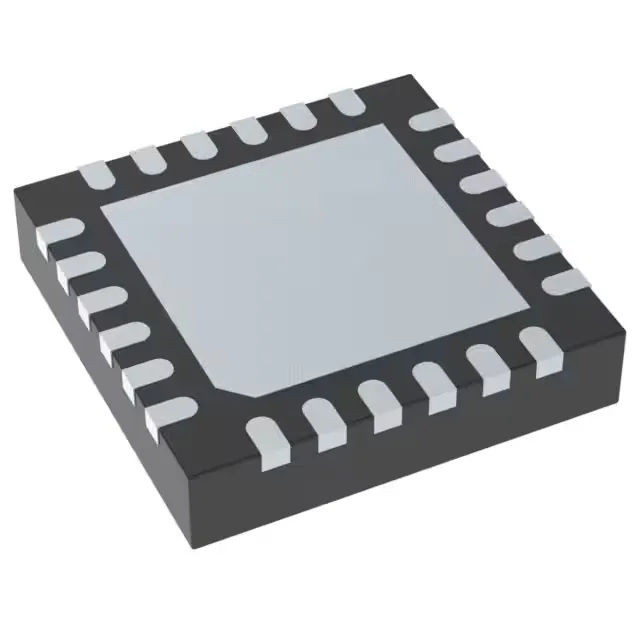
Texas Instruments BQ25619RTWR — Power Management (PMIC / Gate Driver)

BQ25619RTWR I²C 1-Cell Li-Ion Charger, 1.5 A Max, 24-WQFN

MPNBQ25619RTWR
Active

Texas Instruments BQ25619RTWR, 1-cell Li-Ion/Li-Pol battery charger, I²C interface, 1.5 A max charge current, 13.5 V max supply, 24-WFQFN Exposed Pad package, active lifecycle.

$4.1300Ref. price · indicative, final on quote
Independent supplier — new & surplus stockAuthenticity-screened · ESD-safe packingListing updated Aug 2026

Specifications

BQ25619RTWR specifications
ParameterValue
MountingSurface Mount
Battery pack voltage4.2V
Supply voltage13.5V
Current - chargingConstant - Programmable
Charge current - max1.5A
InterfaceI²C
Operating temperature-40°C~85°C(TA)
PackageTape & Reel (TR); Cut Tape (CT)
Case24-WFQFN Exposed Pad
Number of cells1
Fault protectionOver Current, Over Temperature, Over Voltage
Battery chemistryLithium Ion/Polymer
Programmable featuresCurrent

Product details

1.5 A charge ceiling for a 1-cell Li-ion pack

It accepts input voltages up to 13.5 V, covering USB and common adapter rails without a separate pre-regulator. Integrated fault protection — over-current, over-temperature, and over-voltage — reduces external monitoring components and simplifies the BOM for space-constrained portable designs.

I²C programmability and charge-profile flexibility

The I²C interface allows a host MCU to adjust the charge current and battery regulation voltage dynamically, enabling adaptive charging profiles for different cell capacities or temperature conditions. The charge current is constant and programmable, so the system can trade charge time against thermal budget.

Frequently asked questions

What is the maximum charge current for the BQ25619RTWR?

The maximum charge current is 1.5 A, programmable via the I²C interface. The actual charge rate in a design depends on the thermal dissipation of the 24-WQFN package and the input voltage headroom.

What communication interface does the BQ25619RTWR use?

The BQ25619RTWR uses an I²C interface for programming charge current and reading status registers. This allows a host microcontroller to adjust the charging profile in real time.