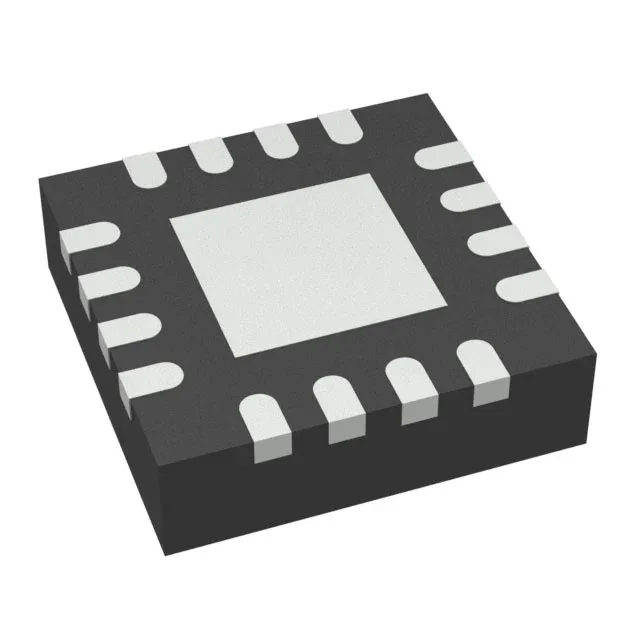
3 A single-cell Li-ion charger with USB interface
It integrates constant-current/constant-voltage (CC/CV) regulation with programmable charge voltage options of 4.1V, 4.2V, 4.35V, and 4.4V, covering the most common Li-ion and Li-Po termination voltages without external resistor dividers. The device operates from a supply up to 17 V, making it suitable for 5V USB, 9V/12V adapters, or unregulated wall warts. The USB interface simplifies connection to standard USB power sources, and the integrated fault protection — over-current, over-temperature, over-voltage, and short-circuit — reduces external component count and improves BOM reliability.
Charge current and voltage — what sets the BOM
The 3 A maximum charge current is the headline parametric for charge time and thermal design. For lower-power designs, the charge current is programmable via an external resistor, so the same PCB layout can serve multiple product tiers. The four selectable battery regulation voltages (4.1V, 4.2V, 4.35V, 4.4V) let a single BOM line cover standard Li-ion cells, high-voltage Li-Po (4.35V), and long-life chemistries (4.1V). The voltage is set by pin-strapping, not I2C, so no firmware dependency — a clean hardware-only charge solution.
Protection and programmable features
The BQ25303JRTER integrates over-current, over-temperature, over-voltage, and short-circuit protection. For a procurement team, this means fewer external protection components (no separate OVP IC, no PTC fuse in many cases) and a simpler qualification matrix. The programmable features — charge current and regulation voltage — are set by external resistors, not digital registers, which avoids firmware validation overhead.
For a BOM line, this means no last-time-buy planning required and full manufacturer support for new designs.