What this linear charger brings to a single-cell Li-ion design
The BQ25157YFPR is a single-cell Li-ion linear charger from Texas Instruments, with a maximum charge current of 1.5 A. That 1.5 A ceiling is the thermal anchor for the BOM — linear charging means the pass element drops the full differential between input and battery voltage, so at 1.5 A the package dissipation can hit 2–3 W if the input is 5 V and the battery is at 3.7 V. The charger is controlled via an I²C interface, which lets the system microcontroller program the charge current, charge voltage, and safety timer on the fly. This is useful for designs that need to adjust the charge profile based on battery temperature or state of charge without changing resistors.
Parametric deep-dive: protection, temperature, and supply
Built-in fault protection covers over-current, over-voltage, and short-circuit conditions. That means the BOM can skip an external current-sense resistor and a separate OVP IC in many cases, saving board space and cost. Maximum supply voltage is 6.05 V, and the battery regulation voltage is programmable from 2.4 V to 4.6 V. The 6.05 V input ceiling means a standard 5 V USB supply is fine, but a 5% tolerance supply that peaks at 5.25 V is still safe; a 12 V rail would need a pre-regulator.
Package and reflow: what the DSBGA demands on the line
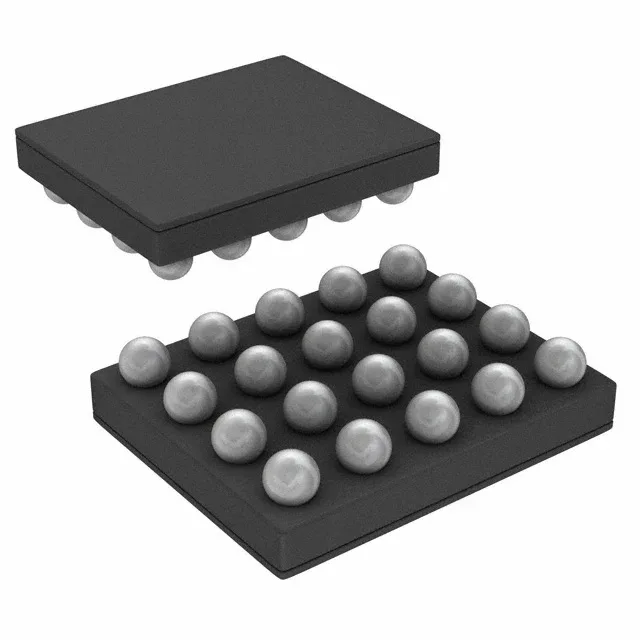
The BQ25157YFPR comes in a 20-pin DSBGA package, with the supplier device package designation 20-DSBGA. This is a wafer-level chip-scale package — the solder balls are the terminals, and the package outline is barely larger than the die. Reflow profile must follow the JEDEC standard for the ball alloy; the MSL level should be verified from the TI datasheet before the reel hits the line. A stencil aperture reduction (10–15% area) on the inner balls helps prevent bridging under the die shadow. The 20-XFBGA case code means the balls are on a 0.4 mm or 0.5 mm pitch — confirm the pad geometry against the TI recommended land pattern before the PCB order.
Texas Instruments has not announced an end-of-life or a successor for this order code.