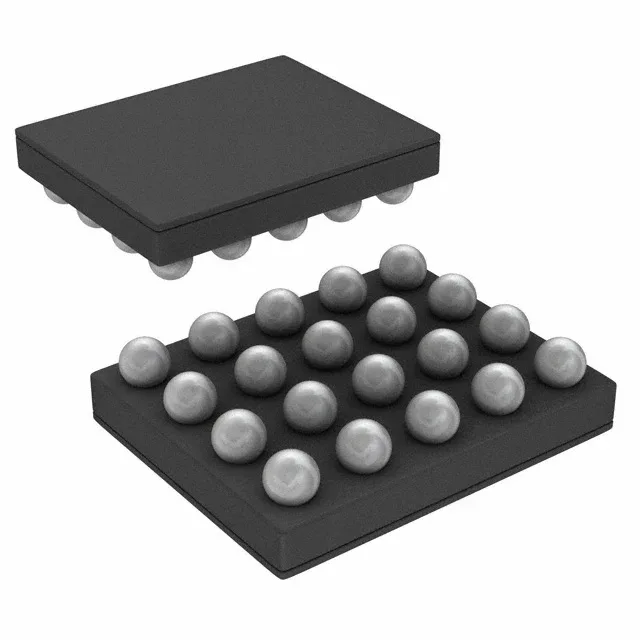
500 mA I²C-programmable linear charger for 1-cell Li-ion
It integrates fault protection covering overcurrent, overtemperature, overvoltage, reverse battery, and short-circuit conditions.
I²C programmability and fault envelope
Charge current is set through the I²C interface — no external resistor divider needed, which saves two passives and one GPIO. The protection set covers the common failure modes in single-cell portable systems: input overvoltage, battery reverse connection, and die overtemperature. The 3.6 V max supply means this part runs off a standard USB VBUS or a regulated 3.3 V rail, not a 5 V direct input — plan the upstream supply accordingly.
No PCN or last-time-buy has been issued.
20-bump DSBGA — layout and assembly considerations
The 20-DSBGA package has a 0.4 mm ball pitch typical for this class. A four-layer board with microvias is recommended for fan-out. The 1-cell architecture targets battery packs with a 4.2 V termination voltage.