20V input ceiling — the input-source flexibility this charger buys
That 20V max supply means you can power it from a USB-C PD adapter, a standard 5V USB port, or an unregulated 12V rail without needing a separate buck pre-regulator. The I²C interface lets the host controller program charge current and voltage thresholds on the fly — useful when the same PCB must support different battery chemistries or cell capacities across product variants.
300 mA charge current — sized for compact single-cell packs
The maximum charge current is 300 mA. For a 200–500 mAh single-cell Li-ion or Li-Pol pack — common in wearable, hearable, and compact IoT sensor nodes — this current delivers a 1- to 3-hour charge cycle. The constant-current regulation profile, combined with the over-voltage and short-circuit fault protection, keeps the cell within its safe operating area without an external thermistor or protection IC in many designs.
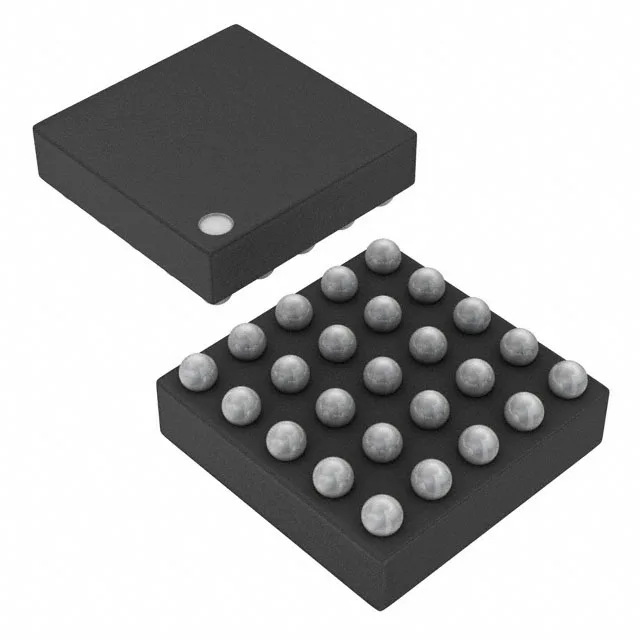
25-DSBGA footprint — layout constraints for the small-package charger
The supplier device package is 25-DSBGA.
There is no last-time-buy notice to track and no successor part to qualify.