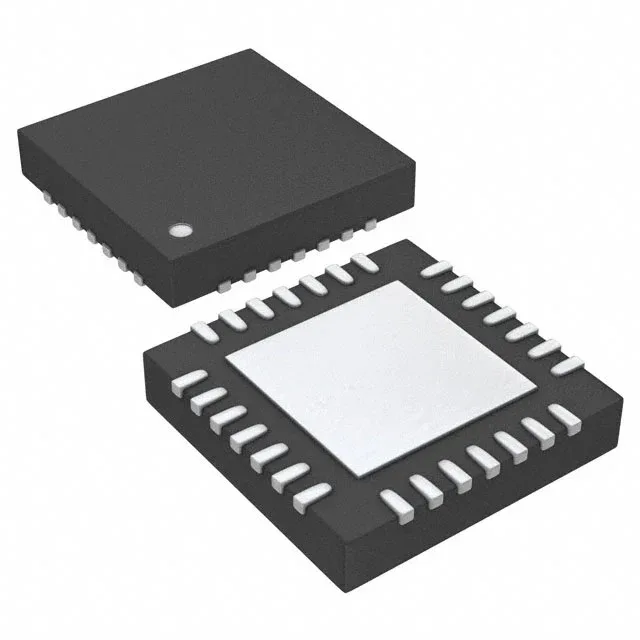
Texas Instruments BQ24751BRHDT — Power Management (PMIC / Gate Driver)

BQ24751BRHDT – TI Multi-Chemistry Battery Charger IC, 10A

MPNBQ24751BRHDT
Active

Texas Instruments BQ24751BRHDT, Power Management (PMIC / Gate Driver), Multi-Chemistry battery charger IC, 2-4 cells, 10 A max charge current, 24 V supply max, 28-VFQFN Exposed Pad, -40°C~125°C(TJ)

$15.9900Ref. price · indicative, final on quote
Packaging28-VFQFN Exposed Pad
RoHSROHS3 Compliant
Independent supplier — new & surplus stockAuthenticity-screened · ESD-safe packingListing updated Aug 2026

Specifications

BQ24751BRHDT specifications
ParameterValue
MountingSurface Mount
Battery pack voltage18.048V (Max)
Supply voltage24V
Current - chargingConstant - Programmable
Charge current - max10A
Operating temperature-40°C~125°C(TJ)
PackageTape & Reel (TR); Cut Tape (CT)
Case28-VFQFN Exposed Pad
Number of cells2 ~ 4
Fault protectionOver Current, Over Voltage
Battery chemistryMulti-Chemistry

Product details

10 A charge current for multi-cell packs

The BQ24751BRHDT is a multi-chemistry battery charger IC from Texas Instruments that handles 2 to 4 series cells with a programmable charge current up to 10 A. That current ceiling puts it squarely in the notebook, power-tool, and portable-instrument bracket where a 4S Li-ion pack needs more than the typical 4 A charger can deliver. The constant-current loop is programmable, so the same BOM can be tuned for a 2-cell ultrabook or a 4-cell workstation pack by changing one resistor divider.

Fault protection and thermal envelope

Over-current and over-voltage fault protection are on-chip, which saves a comparator and a sense-resistor monitor on the layout. In a sealed enclosure where the charger shares a board with hot MOSFETs and the battery pack, the 125°C TJ rating gives real margin; the die won't derate charge current until the junction actually reaches the thermal limit.

Frequently asked questions

What is the maximum charge current for BQ24751BRHDT?

The maximum programmable charge current is 10 A. The charge current is constant and programmable, so the actual limit is set by the external sense resistor and the current-limit programming pin.