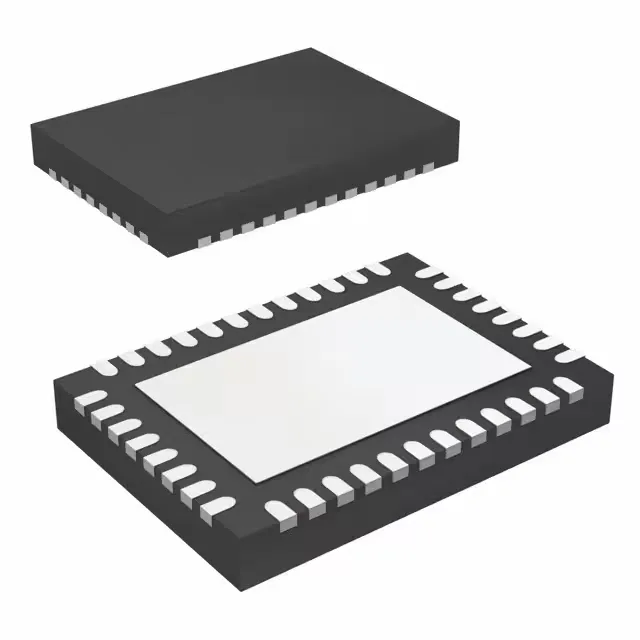
Texas Instruments BQ24730RGFR — Power Management (PMIC / Gate Driver)

Texas Instruments BQ24730RGFR Battery Charger IC, 3-4 Cell

MPNBQ24730RGFR
Obsolete

Texas Instruments BQ24730RGFR multi-chemistry battery charger IC, 3-4 cells, 16.8V pack voltage, programmable charge current, fault protection, industrial temp -40°C to 85°C, 40-VFQFN (7x5 mm).

$3.8700Ref. price · indicative, final on quote
Independent supplier — new & surplus stockAuthenticity-screened · ESD-safe packingListing updated Jul 2026

Specifications

BQ24730RGFR specifications
ParameterValue
MountingSurface Mount
Battery pack voltage16.8V
Supply voltage24V
Current - chargingConstant - Programmable
Operating temperature-40°C~85°C(TA)
PackageTape & Reel (TR); Cut Tape (CT)
Case40-VFQFN Exposed Pad
Number of cells3 ~ 4
Fault protectionOver Current, Reverse Battery
Battery chemistryMulti-Chemistry
Programmable featuresCurrent

Product details

3-4 cell multi-chemistry charger — what the ratings mean

The BQ24730RGFR is a multi-chemistry battery charger IC from Texas Instruments, designed for 3-4 series cells with a battery pack voltage of 16.8V — the standard ceiling for a 4-cell Li-ion stack. Charge current is constant and programmable via an external resistor, giving the designer control over the charge profile without firmware overhead. Maximum supply voltage is 24V, which accommodates common 19V laptop adapters and 24V industrial rails. Fault protection covers overcurrent and reverse battery conditions — a safety net that eliminates external comparators or fuses on the pack input.

Industrial temperature grade and QFN footprint

Surface-mount assembly; the exposed pad also serves as the ground return for the power stage.

Frequently asked questions

Is the BQ24730RGFR compatible with 4-cell lithium batteries?

Yes — the part supports 3 to 4 cells with a battery pack voltage of 16.8V, which is the nominal full-charge voltage for a 4-cell Li-ion or Li-polymer stack. The multi-chemistry charging engine also handles LiFePO4 and other chemistries with the appropriate cell-count programming.