The Texas Instruments BQ24726RGRR is a Li-Ion battery charger IC designed for 1 to 4 series cells, with a maximum battery pack voltage of 19.2V. An I²C interface allows the host microcontroller to program charge current and voltage, making it suitable for multi-chemistry or multi-cell systems where the charging profile must be adjusted dynamically. Integrated fault protection covers over-current, over-voltage, and short-circuit conditions, reducing external component count and simplifying the safety design.
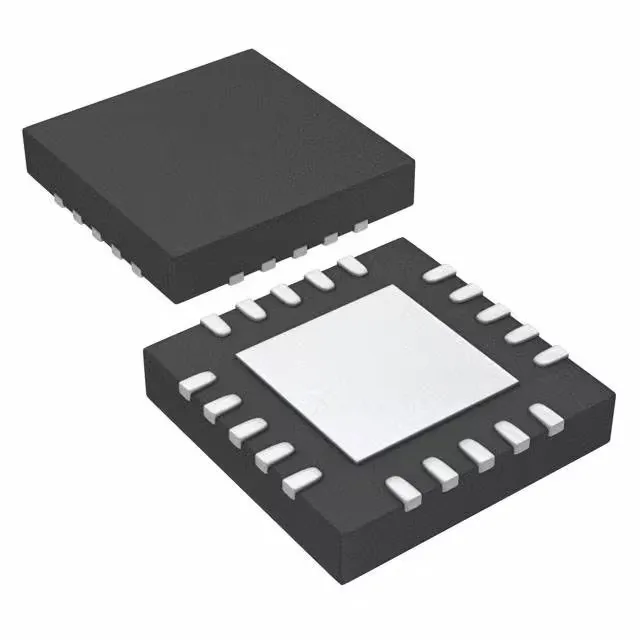
BQ24726RGRR Li-Ion Battery Charger IC, I²C, 1–4 Cells
MPNBQ24726RGRR
Active
Texas Instruments BQ24726RGRR Li-Ion battery charger IC, I²C-controlled, 1–4 cells, 19.2V max pack voltage, constant programmable charge current, over-current/over-voltage/short-circuit protection, 20-VFQFN exposed pad package, 0°C–125°C junction temperature.
$6.2300Ref. price · indicative, final on quote
Independent supplier — new & surplus stockAuthenticity-screened · ESD-safe packingListing updated Aug 2026
Specifications
| Parameter | Value |
|---|---|
| Mounting | Surface Mount |
| Battery pack voltage | 19.2V (Max) |
| Supply voltage | 24V |
| Current - charging | Constant - Programmable |
| Interface | I²C |
| Operating temperature | 0°C~125°C(TJ) |
| Package | Tape & Reel (TR) |
| Case | 20-VFQFN Exposed Pad |
| Number of cells | 1 ~ 4 |
| Fault protection | Over Current, Over Voltage, Short Circuit |
| Battery chemistry | Lithium Ion |
Product details
Frequently asked questions
How many cells can BQ24726RGRR charge?
The BQ24726RGRR supports charging 1 to 4 series Li-Ion cells, with a maximum battery pack voltage of 19.2V.
What fault protections does BQ24726RGRR have?
The BQ24726RGRR integrates over-current, over-voltage, and short-circuit protection, eliminating the need for external comparators or supervisory circuits.
What is the difference between BQ24726RGRR and BQ24725?
The BQ24726 is a pin-compatible variant within the same family; the primary difference lies in the I²C register map and charge voltage set-point resolution. For exact register differences, refer to the respective datasheets. Both parts share the same package and pinout, so a board swap is possible with firmware changes.