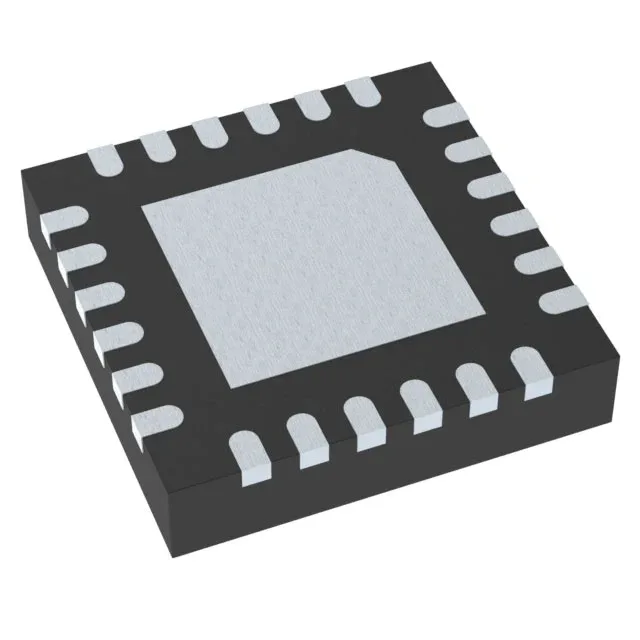
10 A charge current — what it buys you
The BQ24610RGET is a synchronous buck charger IC from Texas Instruments for 1-6 cell Lithium Ion or Lithium Polymer battery packs. Its headline rating is the 10 A maximum charge current, which puts it in the high-current tier for a single-chip charger — you can fill a 100 Wh pack (say, a 4S4P 18650 array) in under an hour without an external pass transistor.
Input voltage and cell count — matching the rail
The 28 V maximum supply voltage gives headroom for a 24 V adapter or a regulated 19 V laptop brick, with margin for transients. The charger handles 1 to 6 series cells — a 4-cell Li-Ion pack (nominal 14.8 V, full-charge 16.8 V) is well within the 2.1 V minimum battery pack voltage and the 28 V input ceiling.
Programmable current and built-in fault protection
Charge current is constant and programmable via a single resistor — no I²C or firmware needed, which simplifies the BOM and keeps the design analog. The IC packs over-current, over-temperature, over-voltage, and short-circuit protection, so you don't need separate supervisory ICs for each fault type.
The 0.50 mm pitch is manageable for hand rework with flux and tweezers — just pre-tin the pad, align by the pin-1 chamfer, and reflow.