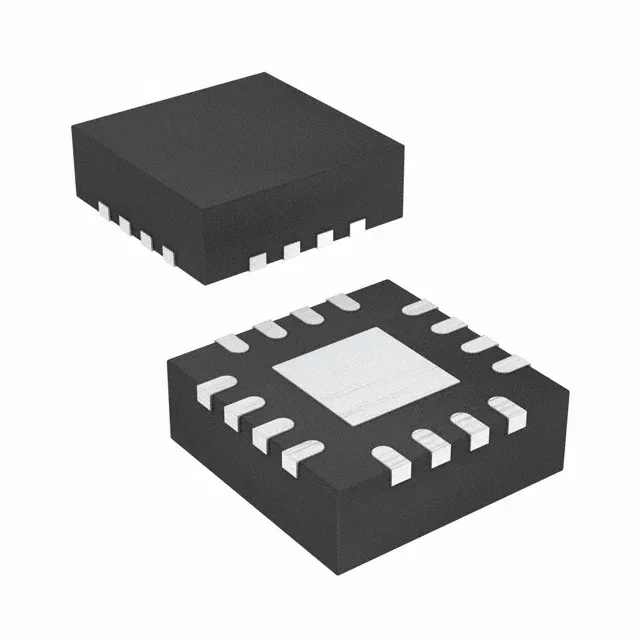
Texas Instruments BQ24600RVAR — Power Management (PMIC / Gate Driver)

BQ24600RVAR – TI Li-Ion Battery Charger IC, 1-6 Cell, 10A

MPNBQ24600RVAR
Active

Texas Instruments BQ24600RVAR, Li-Ion/Polymer battery charger, 1-6 cells, 10A max charge current, 28V supply, 16-VQFN (3.5x3.5) exposed-pad package, -40°C to 85°C operation.

$5.3100Ref. price · indicative, final on quote
Packaging16-VFQFN Exposed Pad
RoHSROHS3 Compliant
Independent supplier — new & surplus stockAuthenticity-screened · ESD-safe packingListing updated Aug 2026

Specifications

BQ24600RVAR specifications
ParameterValue
MountingSurface Mount
Battery pack voltage14V (Max)
Supply voltage28V
Current - chargingConstant - Programmable
Charge current - max10A
Operating temperature-40°C~85°C(TA)
PackageTape & Reel (TR); Cut Tape (CT)
Case16-VFQFN Exposed Pad
Number of cells1 ~ 6
Fault protectionOver Current, Over Temperature, Over Voltage, Short Circuit
Battery chemistryLithium Ion/Polymer
Programmable featuresCurrent

Product details

What the BQ24600RVAR does in the power stage

The BQ24600RVAR is a switch-mode Li-Ion/Polymer charge controller that handles 1 to 6 series cells with a programmable constant-current charge up to 10 A. The 28 V maximum supply input covers most 2S to 6S battery stacks from a regulated adapter or a pre-regulated bus. Fault protection is built in: over-current, over-temperature, over-voltage, and short-circuit detection are all on-chip, which simplifies the supervisory circuit around the charger and reduces the component count for safety compliance.

Charge current and cell-count flexibility

The 10 A maximum charge current sets the power-stage design: a 10 A charger at 25.2 V (6S) delivers 252 W, so the external MOSFETs, inductor, and PCB copper must be sized for that continuous power. The current is programmable via a single resistor, which lets the same BOM support multiple battery capacities with a passive change. With 1 to 6 cell support, a single BQ24600RVAR can charge a 3.7 V single-cell pack or a 25.2 V six-cell stack. The battery pack voltage limit is 14 V max, which means for 5S and 6S configurations the charge termination voltage must be set below 14 V — a 6S Li-Ion at 4.2 V/cell terminates at 25.2 V, so the BQ24600RVAR is not a fit for 6S at the standard 4.2 V/cell. It handles 1S through 4S at the standard 4.2 V/cell, or 5S/6S at a reduced per-cell voltage.

Package, mounting, and production status

Confirm the BOM position count and the mating half before committing.

Frequently asked questions

Does the BQ24600RVAR support a 4-cell Li-Ion battery?

Yes. The BQ24600RVAR handles 1 to 6 cells, and a 4-cell Li-Ion pack at 4.2 V/cell (16.8 V full charge) is within the 14 V battery pack voltage limit — the charger terminates at 14 V, so a 4S pack must be charged to 3.5 V/cell or the termination voltage must be adjusted. For standard 4.2 V/cell termination, a 3S pack is the highest cell count that fits the 14 V limit.

Can the BQ24600RVAR charge LiFePO4 batteries?

The device is specified for Lithium Ion/Polymer chemistry. LiFePO4 cells have a different voltage profile (3.2 V nominal, 3.6 V max) and require a different charge algorithm. The BQ24600RVAR is not designed for LiFePO4 — use a charger IC that supports that chemistry.

Does the BQ24600RVAR require external MOSFETs?

Yes. The BQ24600RVAR is a charge controller, not a full integrated charger — it drives external N-channel MOSFETs in a synchronous buck topology. The external MOSFETs, inductor, and sense resistor must be selected based on the charge current and input voltage. The datasheet provides a typical application circuit.

How does the BQ24600RVAR compare to the BQ24610?

The BQ24610 is a sibling in the same family with a different charge current limit and cell-count support. The BQ24600RVAR supports up to 10 A charge current and 1-6 cells with a 14 V battery pack voltage limit. The BQ24610 typically supports a higher battery pack voltage and different current limit — confirm the exact specifications from the respective datasheets before substituting.