Single-cell Li-Ion charger with I²C programmability
The Texas Instruments BQ24192RGER is a single-cell Lithium Ion/Polymer battery charger IC that handles up to 4.5 A of charge current from a supply rail as high as 17 V. Charging parameters are set over an I²C interface, so the charge voltage (4.2 V battery pack target), current profile, and termination thresholds live in firmware rather than fixed resistor dividers.
What the 4.5 A charge current means for your BOM
4.5 A is the maximum programmable charge current — enough to charge a typical 3000 mAh single-cell pack in under an hour at the 1.5 C rate, assuming the input supply and thermal design can sustain it. The constant-current phase is programmable, so you can dial back the current for smaller cells or to stay within the thermal budget of a compact enclosure. Integrated fault protection covers over-current, over-temperature, and over-voltage events — the IC handles the safety monitoring without an external supervisor.
Package and layout for the 24-VQFN
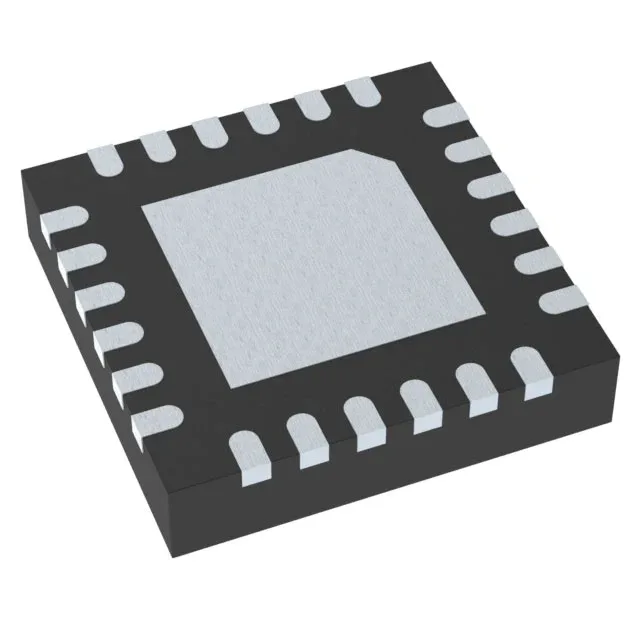
Housed in a 24-VFQFN with exposed pad (4 mm × 4 mm), the BQ24192RGER requires a thermal land pattern on the PCB to conduct heat from the die to the board plane. The 0.5 mm pitch QFN is hand-solderable with a fine tip and flux — a hot-air rework station makes alignment easier, but a careful drag-solder on the perimeter pads works for prototypes.