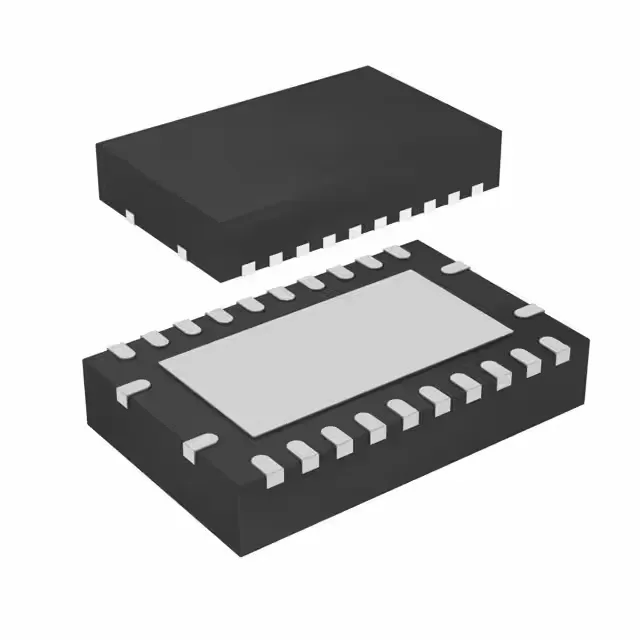
Texas Instruments BQ24170RGYR — Power Management (PMIC / Gate Driver)

BQ24170RGYR 4A Li-Ion Charger, 1-3 Cells, 24-VQFN

MPNBQ24170RGYR
Active

Texas Instruments BQ24170RGYR, Li-Ion/Polymer battery charger, 4A max charge current, 1-3 cells, 4.2V pack voltage, 17V max supply, -40°C to 85°C, 24-VFQFN Exposed Pad, Surface Mount, Active.

$4.8600Ref. price · indicative, final on quote
Independent supplier — new & surplus stockAuthenticity-screened · ESD-safe packingListing updated Aug 2026

Specifications

BQ24170RGYR specifications
ParameterValue
MountingSurface Mount
Battery pack voltage4.2V
Supply voltage17V
Current - chargingConstant - Programmable
Charge current - max4A
Operating temperature-40°C~85°C(TA)
PackageTape & Reel (TR); Cut Tape (CT)
Case24-VFQFN Exposed Pad
Number of cells1 ~ 3
Fault protectionOver Current, Over Temperature, Over Voltage
Battery chemistryLithium Ion/Polymer
Programmable featuresCurrent

Product details

4A programmable charger for 1-3 cell Li-Ion packs

The Texas Instruments BQ24170RGYR is a constant-current, constant-voltage Li-Ion/Polymer battery charger that handles 1 to 3 series cells with a programmable charge current up to 4A. The 4.2V battery pack voltage is fixed for single-cell Li-Ion, while the input supply can go up to 17V, covering most wall adapters and USB-C PD sources.

Protection set that saves board space

Built-in fault protection covers overcurrent, overvoltage, and overtemperature conditions — no external supervisor needed. The only programmable feature is charge current, set by a single resistor to ground. That keeps the BOM lean for high-volume builds.

Frequently asked questions

Is BQ24170RGYR compatible with a 2-cell LiPo pack?

Yes — the charger supports 1 to 3 series cells. For a 2-cell pack the battery voltage will be 8.4V (2 × 4.2V), and the charger regulates to the 4.2V per-cell threshold. The input supply must be above 8.4V plus dropout.

Does BQ24170RGYR have overvoltage protection?

Yes — overvoltage protection is included as part of the fault protection block, along with overcurrent and overtemperature.