It uses an I²C interface to program the charge current and charge timer, giving the system host control over the charging profile without external resistors. The maximum charge current is 1.25 A, and the battery regulation voltage tops out at 4.44 V. Over-temperature and over-voltage fault protection are integrated, so the charger can handle fault conditions without a separate supervisor IC.
The I²C interface is the main reason to pick this part over a pin-strap charger. The host can adjust the charge current on the fly to match a weak USB source or a higher-current wall adapter, and the timer can be set to match the battery capacity. That saves a resistor divider and a GPIO on the MCU. The trade-off is that the system firmware must initialize the charger after power-up; a fixed-function part would start charging immediately with no software dependency.
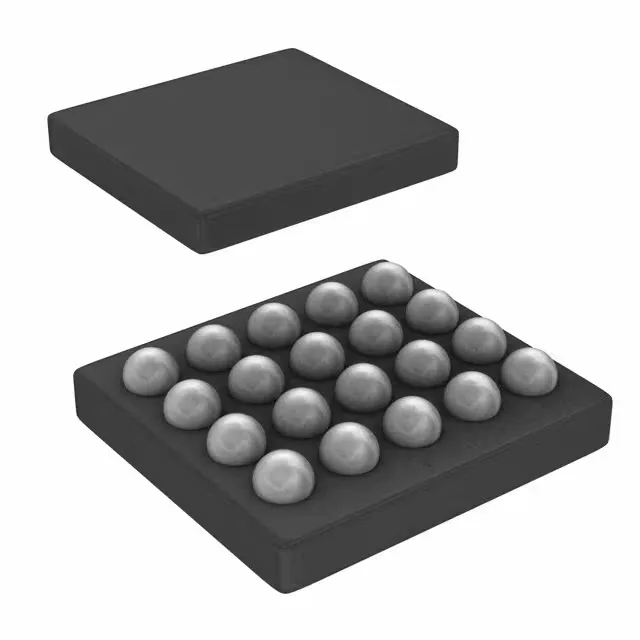
The 20-DSBGA package is a fine-pitch BGA requiring controlled reflow and X-ray inspection for solder-joint verification.
It does not carry AEC-Q100 qualification, so it is not specified for automotive cabin or engine-bay environments. The -30°C low end is useful for cold-weather field gear but not for avionics or downhole tools.
The base product number is BQ24153, so any future die revisions will carry the same base number with a different suffix.