This is not an immediate EOL, but TI has flagged it for eventual discontinuation — new product designs should not target this part. Existing production lines that already qualify the BQ24150YFFT can continue sourcing through independent distribution, but the window for last-time-buy orders from the factory may close without a formal PCN if TI moves it to EOL.
1.25A charge current and I²C programmability
The I²C interface lets firmware set the charge current, termination timer, and battery regulation voltage — the battery pack voltage ceiling is 4.44V max. For a 1000 mAh cell, 1.25A is a 1.25C rate; the thermal limit in the 20-DSBGA package becomes the real constraint at that current, not the silicon itself.
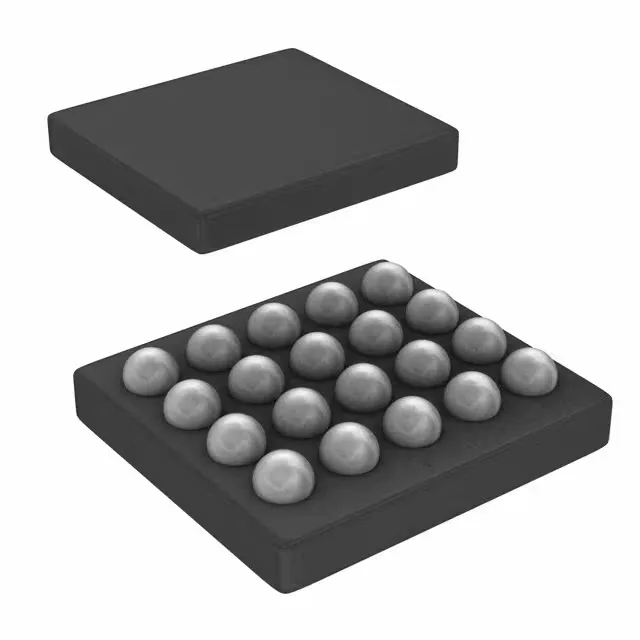
20-DSBGA — layout and assembly realities
The 20-DSBGA (0.4 mm pitch, 20-ball) package is a wafer-level chip-scale package — no mold compound, the die backside is exposed. It demands a controlled solder-paste stencil aperture and a reflow profile tuned for lead-free SAC305. Moisture sensitivity is typically MSL-1 for DSBGA, but verify the date-code-specific MSL level on the reel label before bake decisions.
Fault protection — over-voltage and over-temperature
The charger integrates over-voltage and over-temperature protection. Over-voltage protection clamps the battery voltage at the 4.44V ceiling — critical if the I²C bus glitches and the register value drifts. Over-temperature protection reduces charge current when the die temperature exceeds the threshold, which is a real concern in the DSBGA package with no airflow at 1.25A charge current in a 85°C ambient.