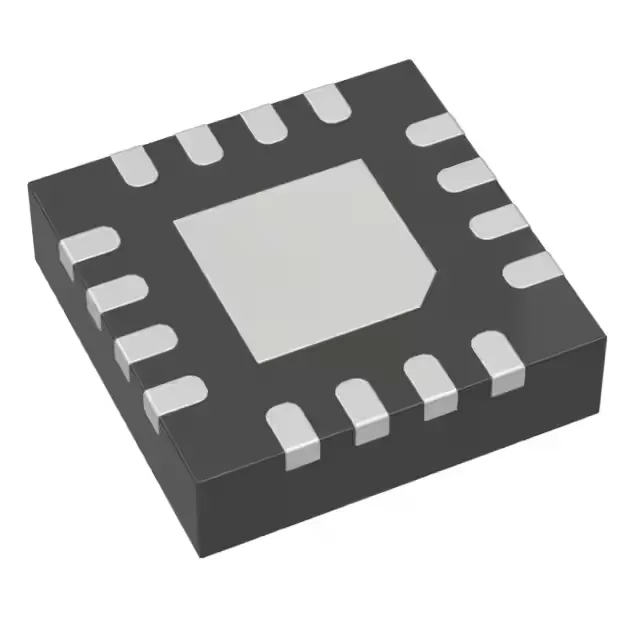
1.5A programmable charge current — sizing the charge for your cell
The BQ24075TRGTR is a Texas Instruments single-cell linear Li-Ion charger with a USB interface. Its maximum charge current of 1.5A is programmable via an external resistor, letting you match the charge rate to the battery capacity — a 1500 mAh cell charges at 1C, while a 750 mAh cell would need a lower set-point to stay within the cell's safe charge rate.
Protection suite — what keeps the cell safe
Four fault-protection blocks are integrated: over-temperature, over-voltage, reverse current, and short circuit. The over-temperature protection monitors die temperature and throttles or shuts down the charger before the junction exceeds the 125°C rating — critical when charging at 1.5A in a compact 3x3 mm QFN package with limited board copper to sink heat. The 4.2V battery pack voltage is the standard termination for lithium-ion cells. The charger enters constant-voltage mode once the cell reaches this threshold, then tapers the current until the safety timer expires or the termination current threshold is met.
Supply rail and USB compatibility
Maximum supply voltage is 6.4V, which covers USB VBUS (5V nominal) with margin for cable drop and transient overshoot. The USB interface designation means the charger can negotiate current limits per the USB specification, though the exact enumeration protocol depends on the upstream host or dedicated charging port.
Surface mount only.
For current designs this means no forced requalification risk.