28V input rating — why this charger survives what others don't
Its 28V maximum supply voltage lets it ride through automotive load-dump transients or 24V industrial bus faults without an external clamp — a feature that saves a TVS diode and PCB area on the BOM. The charge current is constant-current programmable up to 1A, set by an external resistor, and the part includes built-in over-temperature, over-voltage, and short-circuit fault protection.
1A charge current and thermal budget
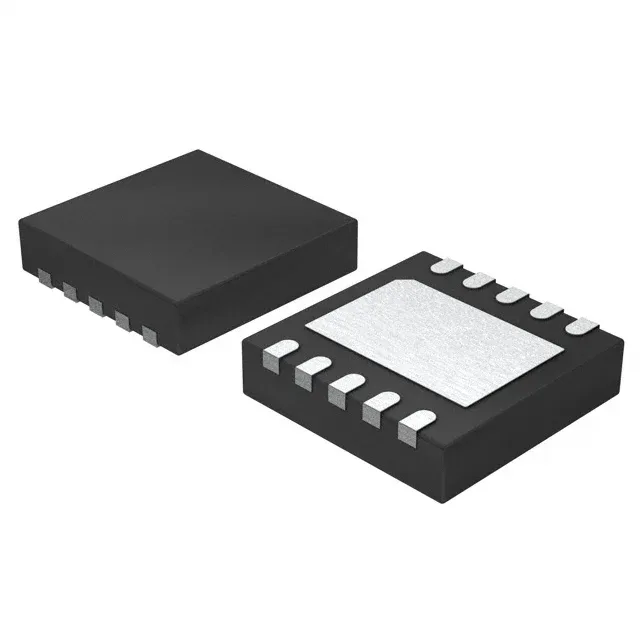
At the full 1A charge current, the linear architecture dissipates power as heat — the 10-WSON exposed pad (2x2 mm) is the thermal path. A layout engineer should stitch vias under the pad to a copper pour on the bottom layer; without that, the junction temperature climbs quickly above 85°C ambient.
Fault protection set — fewer external parts
Over-temperature, over-voltage, and short-circuit protection are integrated, which simplifies safety certification and reduces external component count. The 4.2V battery pack voltage is fixed — the part is designed for standard Li-ion termination at 4.2V, so a 4.2V battery is the correct match.
Surface-mount in a 10-WFDFN exposed-pad package, supplier device package 10-WSON (2x2 mm).
For a buyer filling a BOM line, this is a standard active part with no near-term obsolescence risk.