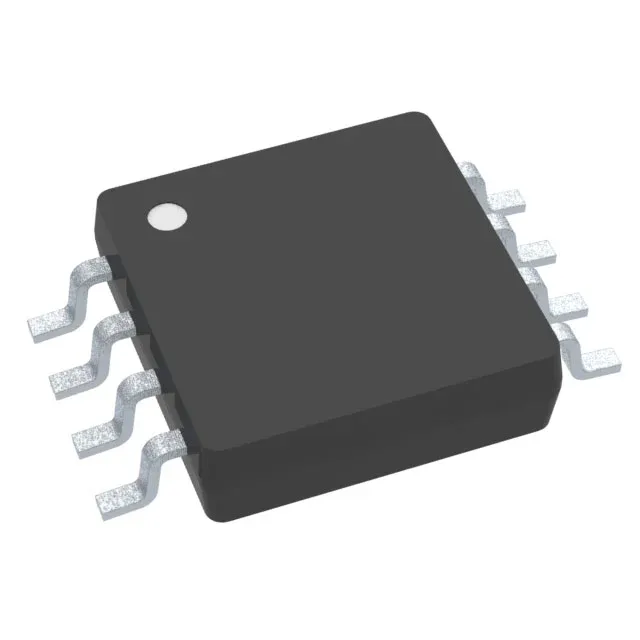
Single-cell Li-Ion/Polymer linear charger in 8-VSSOP
It terminates at a 4.1V battery pack voltage, which is the standard full-charge threshold for many Li-Ion cells rated at 4.2V max — the 4.1V termination leaves a small safety margin below the absolute maximum, extending cycle life at the cost of about 5% capacity. The charge current is constant and programmable via an external resistor, giving the BOM designer control over the charge rate without a microcontroller interface.
What the 4.1V termination means for a 4.2V Li-Po cell
The cell will reach about 90-95% of its rated capacity — acceptable for many portable devices where the slight runtime reduction is tolerable and the trade-off is simpler charging circuitry. For designs that require the full 4.2V termination to hit capacity targets, this part is not the fit; you would need a charger IC with a 4.2V regulation point. The programmable current feature lets you set the charge rate from a few tens of mA up to the IC's thermal limit, which in the 8-VSSOP package is typically around 500-800 mA depending on PCB copper area.
Obsolete — sourcing from the independent channel
No official replacement part is listed by TI for this specific order code, so any substitution requires a pin-compatible evaluation.
Package and temperature grade — commercial indoor use
Housed in an 8-VSSOP (also described as 8-TSSOP or 8-MSOP with 0.118-inch, 3.00mm width) surface-mount package, the BQ2057PDGK is a compact footprint suited for space-constrained portable PCBs. The surface-mount package requires standard reflow soldering; no special moisture sensitivity precautions beyond MSL-1 typical for this package family.