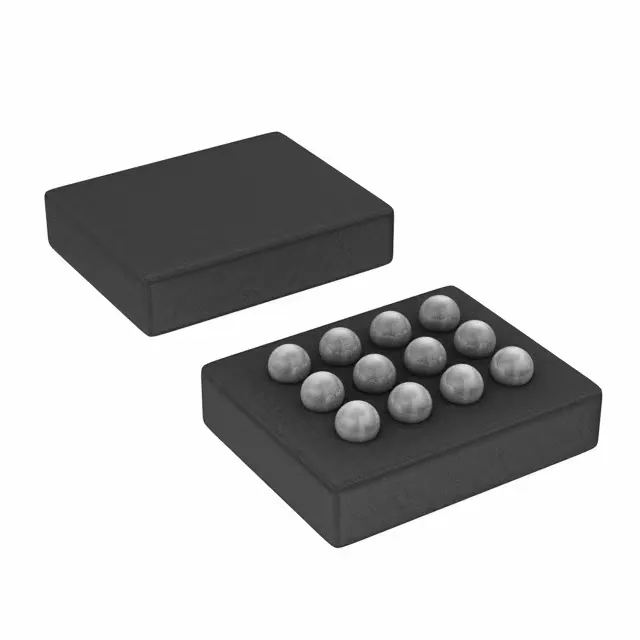
The Texas Instruments BQ2028YZGT is a multi-function controller designed for single-cell battery management in portable devices. It communicates over the HDQ single-wire interface, a TI proprietary protocol that carries both data and clock on one line, minimizing pin count on the host side. The part lives in a 12-DSBGA package (12-UFBGA, DSBGA), a tiny 0.4 mm pitch BGA that saves board space but demands careful PCB layout and rework planning.
HDQ is a single-wire, open-drain interface that runs at up to about 5 kbps typical. The host MCU needs a GPIO that can be toggled for bit-banged communication — no dedicated UART or I2C peripheral required. That makes it simple to integrate, but the timing is tighter than I2C; the datasheet timing parameters need to be respected in firmware.
12-DSBGA — the footprint reality
The 12-DSBGA is a 0.4 mm pitch, 2.0 mm × 1.5 mm (approx) package. That means a small stencil aperture, tight solder-paste registration, and no room for manual probing under the part. X-ray inspection after reflow is the norm — shorts between balls are invisible to the naked eye. The board needs a solder-mask-defined pad with via-in-pad only if the vias are filled and plated; otherwise, route traces between balls on the top layer.
The ROHS3 compliance is current, so no lead-free transition issues.