It delivers an adjustable output from 2.5 V up to 36 V with ±1% tolerance, drawing only 80 µA minimum cathode current to regulate. That low bias current is the headline difference from the classic TL431 family: you can run it from a high-value dropping resistor without wasting milliamps in the reference leg, which matters in standby supplies, auxiliary windings, and any circuit where every microamp counts toward the no-load power budget.
Output voltage range and what it covers
The 2.5 V floor is the bandgap reference voltage; the 36 V ceiling is set by the internal transistor breakdown. This range covers the vast majority of secondary-side regulation loops in offline flyback converters (3.3 V, 5 V, 12 V rails), bias supplies for PFC stages, and industrial control rails up to 24 V. If your design needs a reference below 2.5 V, this part won't work — you'd need a series reference like the LM4132 family instead.
80 µA cathode current — the low-power edge
The 80 µA minimum cathode current is the spec that separates this part from a standard TL431 (which typically needs 1 mA minimum to regulate). In a shunt regulator, the cathode current is the current that flows through the reference itself — wasted from the load's perspective. Dropping from 1 mA to 80 µA cuts that overhead by more than 90%, which directly improves light-load efficiency in a flyback converter's standby mode or extends battery life in a portable instrument's bias rail. The trade-off is that the ATL431LIAIDQNR's transconductance is lower, so the loop compensation may need a slightly different pole-zero placement than a TL431 design — check the phase margin if you're swapping directly.
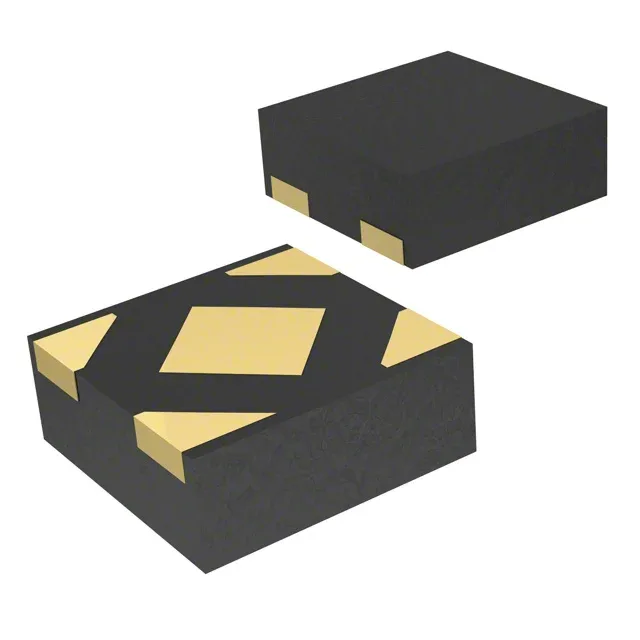
Package and footprint — 1x1 mm X2SON
The 4-X2SON package measures 1x1 mm, which is roughly one-quarter the board area of a SOT-23-3. That tiny footprint comes with a practical cost: the exposed pad is the cathode connection, and the solder joints are small enough that a standard reflow profile needs careful stencil design to avoid opens.
It suits outdoor telecom cabinets, factory-floor sensors, automotive cabin electronics, and consumer power adapters that see moderate thermal cycling. If your design needs 125°C operation, look at the ATL431LI-Q1 automotive-grade variant or a series reference with a wider temperature range.
No LTB planning is needed for the foreseeable future, but the X2SON package is a relatively new format — if your production runs past 2028, keep an eye on TI's PCN feed for any package-migration notices.