16-bit SAR ADC at 40 kSPS — what the sampling rate buys you
The ADS8507IDW is a 16-bit successive-approximation-register (SAR) ADC from Texas Instruments, sampling at 40 kSPS. That 40 kSPS rate means it captures one 16-bit conversion every 25 µs — fast enough to digitise a 2 kHz audio band with headroom for anti-alias filter roll-off, or to oversample a dozen slow sensor channels in a round-robin scan. The single-ended input and 1:1 S/H:ADC ratio mean one sample-and-hold feeds one converter — no mux settling delay between channels. For a single-channel data-acquisition path, this eliminates the timing uncertainty a multiplexed front-end introduces.
SPI and parallel interface — which one to use
The ADS8507IDW offers both SPI and parallel data interfaces. The parallel bus gives you a full 16-bit read in one cycle — useful when the host controller has a free parallel port and you need deterministic read timing. The SPI interface saves pins on the controller side and isolates the ADC from the digital noise on a wide bus. Both digital and analog supply rails run at 5 V, so the digital I/O levels match a 5 V logic bus directly. If the host runs at 3.3 V, a level translator sits between the ADC and the controller.
Industrial temperature range and package
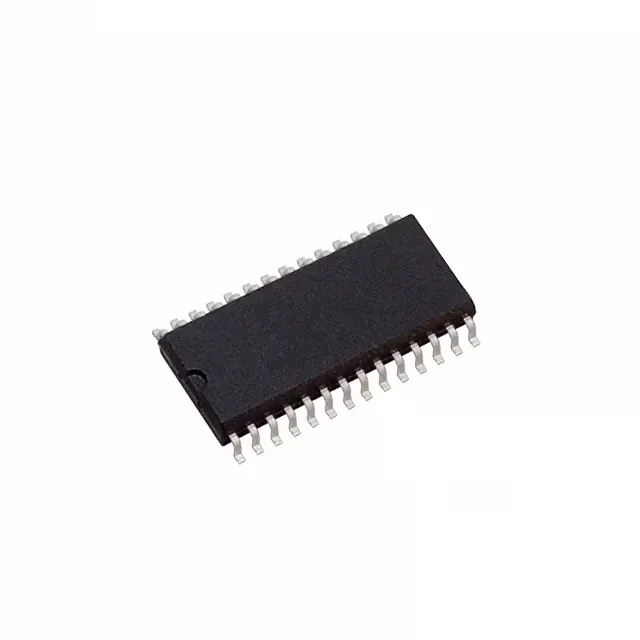
Housed in a 28-SOIC wide-body (7.50 mm width) package, the part is surface-mount with a 1.27 mm pitch — a standard footprint that routes easily on a two-layer board. The tube packaging suits prototype and low-volume production runs.