ADS1115BQDGSRQ1
Texas Instruments
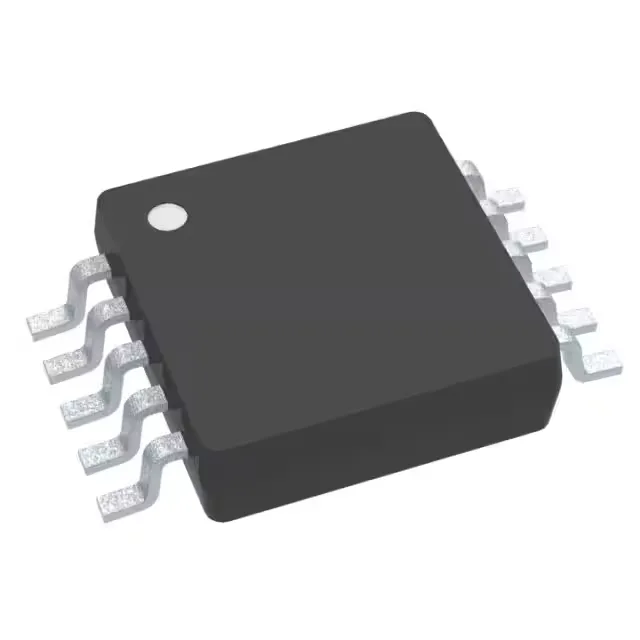
MOQ 1 · Tape & Reel (TR); Cut Tape (CT) · RoHS · EIA-481 · DAP/DDP · T/T
Technical specifications
| Parameter / Attribute | Specification / Value |
|---|---|
| Series | Automotive, AEC-Q100 |
| Input type | Differential, Single Ended |
| Mounting | Surface Mount |
| Reference type | Internal |
| Voltage - supply, analog | 2V ~ 5.5V |
| Voltage - supply, digital | 2V ~ 5.5V |
| I/O channels | 2, 4 |
| Data interface | I²C |
| Operating temperature | -40°C~125°C |
| Package | Tape & Reel (TR); Cut Tape (CT) |
| Features | PGA |
| Architecture | Sigma-Delta |
| Configuration | MUX-PGA-ADC |
| Number of bits | 16 |
| Case | 10-TFSOP, 10-MSOP (0.118\", 3.00mm Width) |
| Ratio - s (H:ADC) | 0:1 |
| Number of a (D converters) | 1 |
| Sampling rate (Per second) | 860 |
Need Stock or a Drop-in Second-Source for ADS1115BQDGSRQ1?
Package: MSOP-10 / QFN-10 · Pin-compatible replacements with immediate Shenzhen spot stock
The ADS1x1x family is the I2C ADC of the instrument and sensor world: 16-bit for the 111x branch, 12-bit for the 101x branch, one shared pinout and one shared register map, so the same driver code runs both with a data-alignment footnote. The channel and PGA ladder inside each branch does the real selection: x113 without gain, x114 with gain on one channel, x115 with the four single-ended inputs that every voltage-logging project leans on. The buying story is short because the family is honest: the only substitution mistake that costs anything is fitting the 12-bit part where a 16-bit budget was specified - the sockets agree, the numeric result does not.
Verified Pin-Compatible Replacements (3 verified alternatives)
The 12-Bit Branch - Faster, Cheaper
Shenzhen Spot Stock (24-48h Dispatch)
Pin-identical and register-identical to the ADS1115 at 12-bit resolution and up to 3300SPS (against 16-bit / 860SPS): the same four single-ended inputs, the same PGA ranges from +/-6.144V down to +/-0.256V.
Same supply and I2C envelope; base address 0x48 set through the ADDR pin.
The Single-Channel Member
Shenzhen Spot Stock (24-48h Dispatch)
The one-input member of the 16-bit branch: a single differential channel with PGA and comparator - the pins beyond AIN0 are not populated.
Same envelope; same 0x48 addressing scheme.
The No-PGA Member
Shenzhen Spot Stock (24-48h Dispatch)
The plainest member: 16-bit, one input, no PGA and no comparator - the resolution without the gain stage.
Same envelope and addressing.
Buyer & Quality Checklist for Sourcing Alternatives
- Resolution decides the branch, channels decide the member: 16-bit 111x (860SPS) against 12-bit 101x (3300SPS); x113 one input no PGA, x114 one input with PGA, x115 four single-ended with PGA. Same pins and registers throughout - the suffix is the whole specification.
- The 12-bit branch left-aligns its result in the 16-bit register: driver code must shift or it reads 16x value. Established libraries handle it; hand-rolled SPI/I2C code is where this bites.
- The PGA input ranges run from +/-6.144V down to +/-0.256V: measuring a 50mV shunt without the gain stage throws away most of the resolution the family exists for. Match the member to the signal amplitude.
- Inputs must stay inside the supply rails even with gain configured - the absolute-maximums do not negotiate, and sensor wiring that floats above VDD turns a measurement project into a diagnosis project.
- Addressing is one pin (0x48 base): multiple converters on one bus need the ADDR pin staged per device - the family supports four addresses and no more without a multiplexer.
- The module boards around this family vary in input protection and reference quality: a genuine 16-bit part on a module with lazy input networks still reads 16-bit values, just not 16 bits of truth.
Frequently Asked Technical Questions
Q: What is the difference between ADS1115 and ADS1015?
A: Resolution and speed: the 1115 is 16-bit at up to 860 samples per second, the 1015 is 12-bit at up to 3300. Same pinout, same register map, same driver with one data-alignment difference - the 12-bit result is left-aligned in the 16-bit register.
Q: Can I swap ADS1115 and ADS1015 boards or code?
A: Hardware yes - same footprint and addressing. Code from the established driver libraries branches automatically; hand-written drivers must respect the alignment and the resolution-dependent scaling.
Q: Which member has the four inputs?
A: The x115 of either branch: four single-ended (or two differential) channels with PGA and comparator. The x114 is one input with gain, and the x113 is one input without - all in the same ten-pin body.