What drives the spec for this ADC
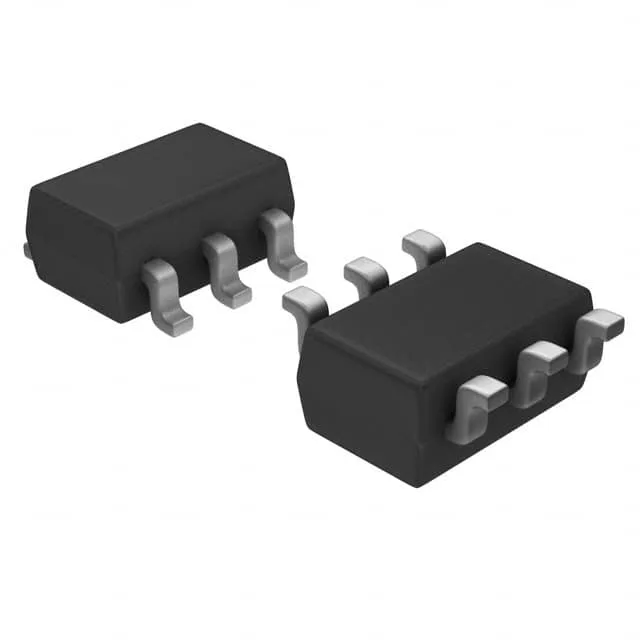
The ADS1110A7IDBVT is a 16-bit sigma-delta ADC from Texas Instruments with a built-in programmable gain amplifier (PGA) and an I²C interface, all in a SOT-23-6 package. The PGA lets you amplify small sensor signals — think thermocouples, strain gauges, or current shunts — before conversion, which directly improves the effective resolution at low input spans.
240 SPS — what it buys you and what it costs
At 240 samples per second, this ADC is tuned for DC and low-frequency measurements — temperature, pressure, load cells — not audio or vibration. The sigma-delta architecture oversamples and decimates, so the noise floor drops as you slow the output rate. For a 16-bit result, the effective resolution at 240 SPS is typically around 15 bits with the PGA set to gain 1; at lower data rates (if the device supports them via the I²C configuration register) you can push closer to the full 16 noise-free bits. The trade-off: you cannot chase fast transients. If your signal changes faster than a few hundred Hz, this part aliases.
Supply and temperature — one rail, wide range
The SOT-23-6 footprint is small enough for a two-layer board with a basic ground plane under the part.