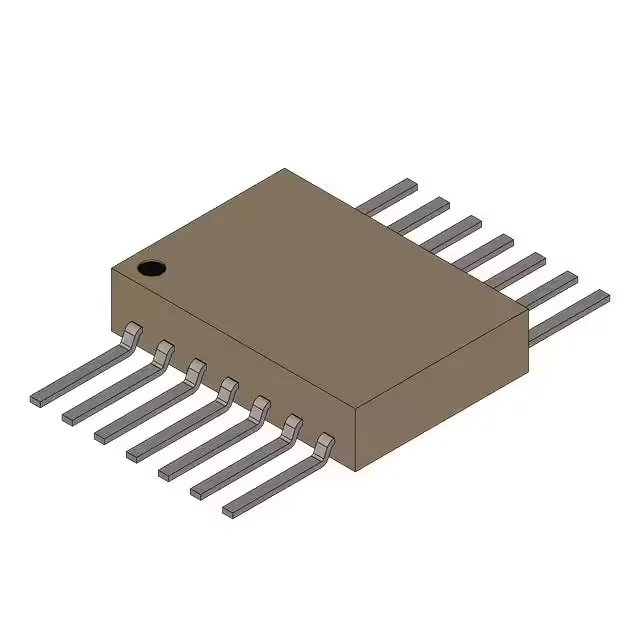
Texas Instruments 9601FM — Discrete Semiconductors

9601FM Multivibrator IC, Active, RoHS Non-Compliant

MPN9601FM
End of Life

9601FM IC MULTIVIBRATOR, series *, Active lifecycle, RoHS non-compliant, Bulk packaging.

$7.51Ref. price · indicative, final on quote
RoHSRoHS non-compliant
Series*
Independent supplier — new & surplus stockAuthenticity-screened · ESD-safe packingListing updated Aug 2026

Specifications

9601FM specifications
ParameterValue
Series*
PackageBulk

Product details

The 9601FM is an IC MULTIVIBRATOR from series *. A multivibrator IC generates square-wave or pulse outputs for timing, clock generation, and frequency-division circuits — common in industrial timers, pulse-width modulators, and signal-conditioning stages where a stable oscillator block is needed without a discrete transistor design.

Lifecycle and compliance — what the buyer needs to know

The device is RoHS non-compliant, indicating a lead-bearing finish. Verify compatibility with your assembly process before use.

Sourcing posture

Because the 9601FM is active and RoHS non-compliant, it is not a standard stock item at most broadline distributors. Submit an RFQ for a firm price and lead-time commitment on your quantity.

Frequently asked questions

What is the best replacement or equivalent for 9601FM?

No official replacement or second-source alternate is listed in the available records. For a direct substitute, compare the functional specifications of other multivibrator ICs in the same logic family and package; the 9601FM's RoHS non-compliant status may limit drop-in options in lead-free designs.

What is the price and lead time for 9601FM?

Pricing and lead time are confirmed at quote time against an RFQ. Because the part is active but RoHS non-compliant, lead times may vary depending on channel availability — submit an RFQ for current terms.

What is a multivibrator IC?

A multivibrator IC is a semiconductor device that generates non-sinusoidal waveforms — typically square waves or pulses — for timing, clock generation, frequency division, and pulse-width modulation. It replaces discrete transistor multivibrator circuits with a single integrated package.

How does the 9601FM differ from a 555 timer?

Both are timing ICs, but the 9601FM is classified as a multivibrator IC, while the 555 timer is a specific timer device with three operating modes (astable, monostable, bistable). Without detailed specs for the 9601FM, the key difference is that the 555 is a standard-function timer with wide supply and output drive, whereas the 9601FM may target a different logic family or output configuration. Compare datasheets for exact timing ranges and output characteristics.