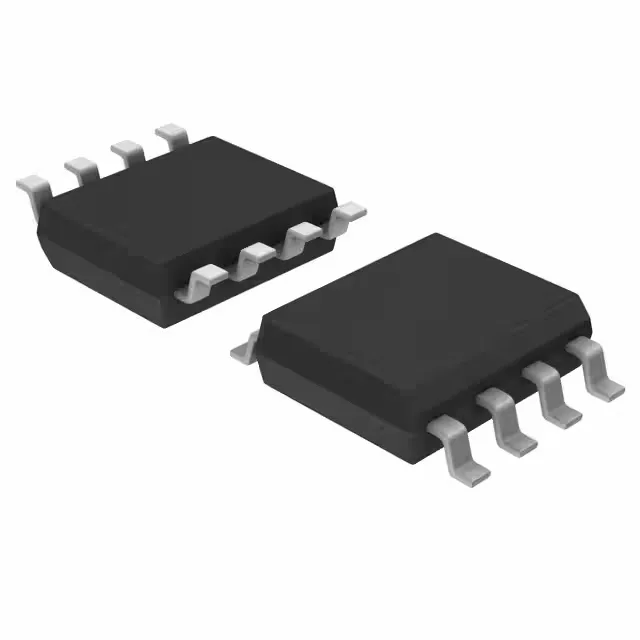
Texas Instruments 74LVC2G125DCTRE4 — Interface & Transceivers

74LVC2G125DCTRE4 Dual Buffer, 1.65V–5.5V, 3-State Output

MPN74LVC2G125DCTRE4
End of Life

Texas Instruments 74LVC2G125DCTRE4, 74LVC series, dual non-inverting buffer with 3-state outputs, 1.65V–5.5V supply, 32mA per channel, -40°C to 125°C, SM8 package.

$0.7000Ref. price · indicative, final on quote
Independent supplier — new & surplus stockAuthenticity-screened · ESD-safe packingListing updated Aug 2026

Specifications

74LVC2G125DCTRE4 specifications
ParameterValue
Series74LVC
Logic typeBuffer, Non-Inverting
Output type3-State
MountingSurface Mount
Supply voltage1.65V ~ 5.5V
Current - output high, low32mA, 32mA
Operating temperature-40°C~125°C(TA)
PackageTape & Reel (TR); Cut Tape (CT)
Case8-LSSOP, 8-MSOP (0.110\", 2.80mm Width)
Number of elements2
Number of bits per element1

Product details

Active dual buffer for mixed-voltage and high-temp boards

Each of the two elements can source or sink 32mA, enough to drive a handful of CMOS inputs or an indicator LED without a separate driver.

At the low end it interfaces cleanly with 1.8V logic cores; at the high end it handles legacy 5V TTL levels. Because the 74LVC family is 5V-tolerant on inputs even when running at 3.3V, you can use this buffer to bridge a 5V peripheral to a 3.3V controller without external level translation.

Housed in an 8-lead SM8 package (the supplier device package code for the 8-LSSOP/MSOP variant with 0.110" body width), this part is a surface-mount device. The 2.80mm width keeps the footprint compact for dense boards.

For dual-sourcing resilience, the base product number 74LVC2G125 covers multiple package options — the DCTRE4 suffix identifies the SM8 tape-and-reel variant.

Frequently asked questions

Is 74LVC2G125DCTRE4 RoHS compliant?

Yes, the part is RoHS compliant as indicated by the lead-free finish on the SM8 package.

What is the difference between 74LVC2G125DCTRE4 and 74LVC2G126DCTRE4?

Both are dual non-inverting buffers with 3-state outputs in the same package and supply range. The key difference is the output-enable polarity: the 74LVC2G125 uses active-low enables (OE-bar), while the 74LVC2G126 uses active-high enables. Choose the 125 when your enable signal is active-low, the 126 when it is active-high.