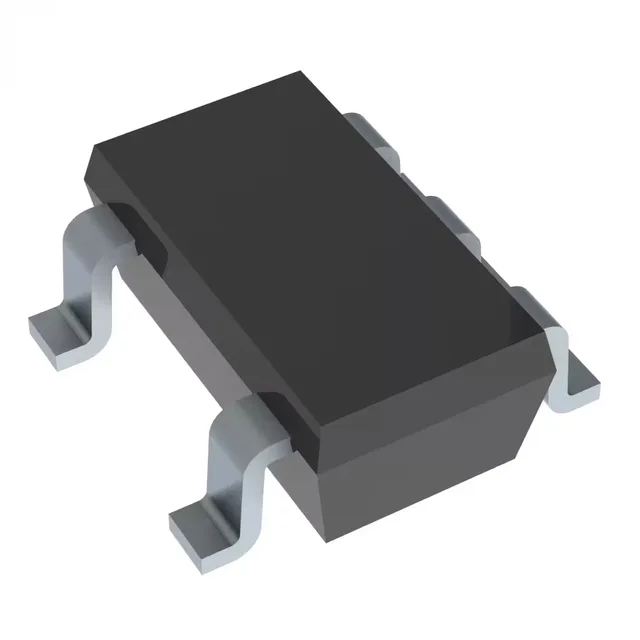
Texas Instruments 74LVC1G125DBVTG4 — Interface & Transceivers

74LVC1G125DBVTG4 Buffer, Non-Inverting, 3-State, SOT-23-5

MPN74LVC1G125DBVTG4
End of Life

Texas Instruments 74LVC1G125DBVTG4, Series 74LVC, Buffer Non-Inverting, 3-State, 1.65V~5.5V supply, 32mA output, -40°C~125°C, SOT-23-5, Tape & Reel.

$6.5700Ref. price · indicative, final on quote
Independent supplier — new & surplus stockAuthenticity-screened · ESD-safe packingListing updated Aug 2026

Specifications

74LVC1G125DBVTG4 specifications
ParameterValue
Series74LVC
Logic typeBuffer, Non-Inverting
Output type3-State
MountingSurface Mount
Supply voltage1.65V ~ 5.5V
Current - output high, low32mA, 32mA
Operating temperature-40°C~125°C(TA)
PackageTape & Reel (TR)
CaseSC-74A, SOT-753
Number of elements1
Number of bits per element1

Product details

The Texas Instruments 74LVC1G125DBVTG4 is a single-bit, non-inverting buffer with a 3-state output, part of the 74LVC logic family. It operates across a supply range of 1.65 V to 5.5 V, making it suitable for mixed-voltage systems where a 3.3 V core interfaces with a 1.8 V or 5 V peripheral. The output enable (OE) pin, active low, places the output in a high-impedance state, allowing multiple devices to share a common bus without contention.

The 74LVC1G125DBVTG4 sources and sinks 32 mA at both high and low output states. This symmetric drive capability is sufficient to drive a single TTL load or a short unterminated trace on a backplane. For longer traces or higher fan-out, the 32 mA limit sets the maximum capacitive load at a given switching frequency — a 50 pF load at 50 MHz will draw roughly 8 mA dynamic current, leaving headroom for DC loads. The 3-state output allows the buffer to be disconnected from the bus when not selected, which is essential in shared data lines or multiplexed address buses.

SOT-23-5 package — footprint and layout notes

The five-pin footprint occupies approximately 3 mm × 3 mm on the board, with a 0.95 mm pin pitch. The SOT-23-5 is a standard surface-mount package compatible with reflow soldering and is widely second-sourced across the industry.

Frequently asked questions

Is 74LVC1G125DBVTG4 equivalent to SN74LVC1G125?

The SN74LVC1G125 is the same functional device from Texas Instruments in the same 74LVC family, but it is offered in multiple package options (including SOT-23-5 and SC-70). The 74LVC1G125DBVTG4 is specifically the SOT-23-5 variant. Both are pin-compatible and electrically identical for the same package option, so they can be used interchangeably in a design that accepts the SOT-23-5 footprint.

What is the difference between 74LVC1G125 and 74LVC1G126?

Both are single-bit non-inverting buffers with 3-state outputs. The difference is the output enable polarity: the 74LVC1G125 uses an active-low OE pin (output enabled when OE is low), while the 74LVC1G126 uses an active-high OE pin (output enabled when OE is high). The 74LVC1G125 is the more common choice for bus isolation where a low-true enable signal is available.