JFET input stage — what it buys the signal chain
The 5962-9080801MHA is a JFET-input dual operational amplifier from the 5962-9080801 series, built for precision analog signal conditioning where input bias current must stay in the picoamp range. With an input bias current of 4 pA and a 2 MHz gain-bandwidth product, this part suits photodiode amplifiers, charge integrators, and high-impedance sensor interfaces that would be degraded by the nanoamp-level bias of a bipolar op-amp. The 3.4 V/µs slew rate supports output swings up to roughly 10 V peak-to-peak at 54 kHz before slew-rate limiting begins — adequate for audio-band and slow industrial sensor signals, but not for video or fast ADC drivers.
Supply rails and temperature — the design envelope
This op-amp operates from a 7 V minimum to a 36 V maximum supply span, which means it requires a split supply of at least ±3.5 V or a single rail of 7 V or higher. The 10-CDFP (ceramic dual flatpack) package is hermetic, making it suitable for high-reliability and sealed-environment deployments where plastic packages would be at risk of moisture ingress or outgassing.
Dual channel, 80 mA output — driving loads and saving board space
Two circuits in one 10-lead ceramic package (10-CDFP) save board area compared to two single op-amps, while each channel can deliver up to 80 mA of output current. That output drive is enough to swing into a 200 Ω load at 10 V, or drive a moderate cable capacitance without an external buffer. Supply current is 625 µA per channel, totalling 1.25 mA for the dual — a reasonable quiescent draw for a precision JFET part, though not as frugal as modern CMOS rail-to-rail alternatives running under 200 µA per channel.
Package and footprint — the ceramic reality
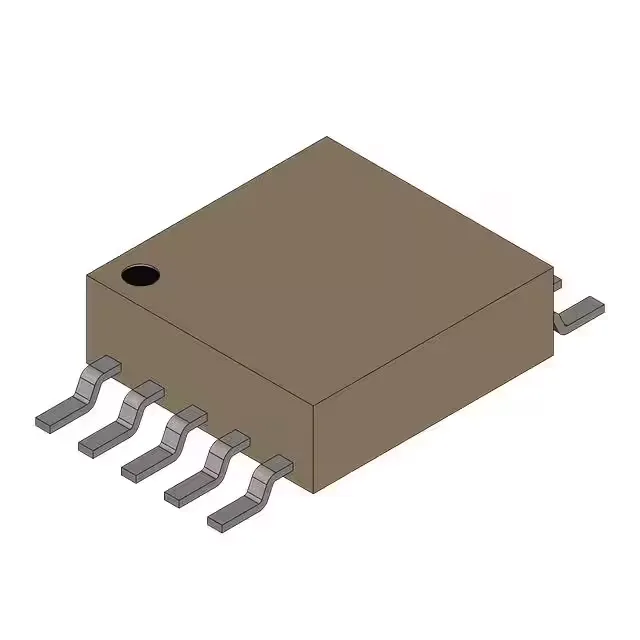
The 10-CDFP (ceramic dual flatpack) is a surface-mount package with gull-wing leads, specified for surface-mount assembly. Unlike plastic packages that carry MSL ratings and require bake before reflow if moisture-exposed, ceramic packages are inherently moisture-resistant — no bake step needed for storage. The listing shows the shipping medium as Bulk, meaning loose devices in an anti-static tube or tray rather than tape-and-reel; for automated pick-and-place, you will need to transfer to a feeder-compatible carrier or order a tape-and-reel variant if one exists.
It is listed as RoHS non-compliant, which is expected for a hermetic ceramic military-grade part — these are typically exempt from RoHS due to the lead-bearing solder finish required for high-reliability solder joints. For designs that require RoHS compliance, a tin-plated commercial equivalent would be needed, but the military temperature range and JFET input stage are rarely available in a fully RoHS-compliant ceramic package.