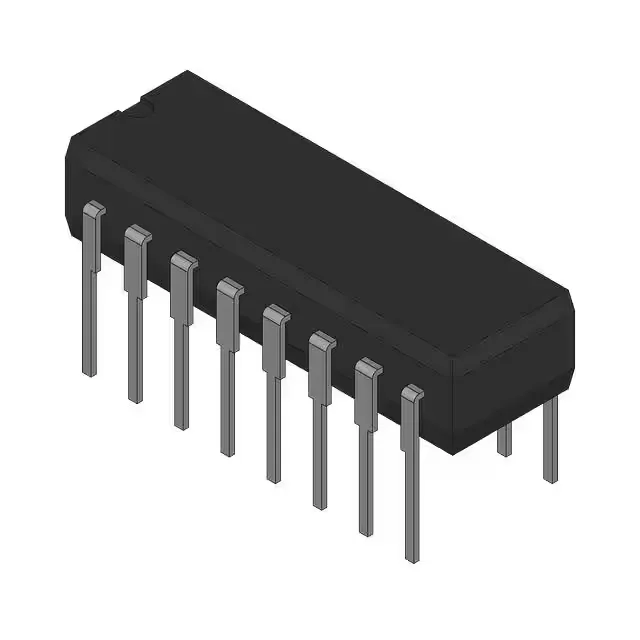
Texas Instruments 54F192DMQB — Analog & Data Acquisition

54F192DMQB Decade Counter, Active, Bulk Package

MPN54F192DMQB
End of Life

54F192DMQB, 54F series decade counter, Bulk package, active lifecycle stage, RoHS non-compliant.

$5.87Ref. price · indicative, final on quote
RoHSRoHS non-compliant
Series*
Independent supplier — new & surplus stockAuthenticity-screened · ESD-safe packingListing updated Aug 2026

Specifications

54F192DMQB specifications
ParameterValue
Series*
PackageBulk

Product details

The 54F192DMQB is a 54F-series synchronous up/down decade counter, designed for high-speed counting in military-temperature-range digital systems.

There is no last-time-buy clock ticking, and no forced redesign to a newer logic family. The RoHS non-compliant marking is expected for this generation of 54F parts — they were designed before the lead-free transition, and the tin-lead finish is compatible with legacy solder profiles used in high-reliability rework and repair.

Sourcing posture for the 54F192DMQB

Because this is an active-production part in a mature logic family, it is available through both franchised and independent channels.

Frequently asked questions

What is the function of the 54F192DMQB decade counter?

The 54F192DMQB is a synchronous up/down decade counter — it counts from 0 to 9 (or 9 to 0) on each clock pulse, with parallel load and asynchronous clear inputs. It is used in frequency division, event counting, and timing-chain applications in 54F-series logic systems.

What are the direct equivalent or replacement parts for 54F192DMQB?

Functional equivalents in the same logic family include the 5493AFM (a 4-bit binary counter, not a decade counter) and the CY74FCT191ATSOC (a 74FCT-series binary up/down counter in a surface-mount package). Neither is a pin-for-pin drop-in; the 54F192DMQB is a unique decade-counter variant with a specific Bulk-package footprint.

What is a decade counter?

A decade counter is a digital circuit that counts through ten distinct states (0 through 9) before resetting to zero. It is commonly used in frequency dividers, digital clocks, and event counters where a base-10 count sequence is needed.