What the 800 V MOSFET and 20 W ceiling mean for your supply
The VIPER26HD integrates an 800 V avalanche-rugged MOSFET and a fixed-frequency current-mode PWM controller. That 800 V breakdown gives you headroom above a universal AC input after derating — enough to survive line surges without a separate clamping circuit. The 20 W output is the practical continuous limit for a flyback running from that rail.
Switching frequency and duty cycle — transformer and EMI decisions
The 115 kHz fixed switching frequency is high enough to shrink the flyback transformer core and reduce the output capacitor ripple current. The 70% maximum duty cycle is typical for a flyback running in continuous-conduction mode at low line — it sets the transformer turns ratio and the reflected voltage stress on the MOSFET.
The part is ROHS3 compliant.
Package and thermal — the 16-SOIC reality
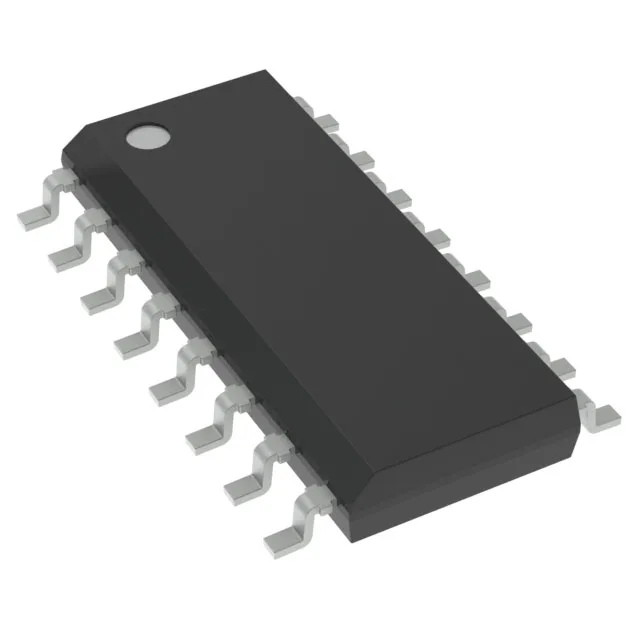
The 16-SOIC package with a 0.154-inch body width and exposed pad (if present on the VIPER26HD variant) is the primary heat path. At 20 W output and 85% efficiency, the internal dissipation is roughly 3.5 W. The junction-to-ambient thermal resistance of a standard SO-16 without a pad is around 70–80 °C/W — that would push Tj above 150 °C at 3.5 W in a 25 °C ambient. For a sealed adapter, plan on a smaller copper island and derate the output power accordingly.