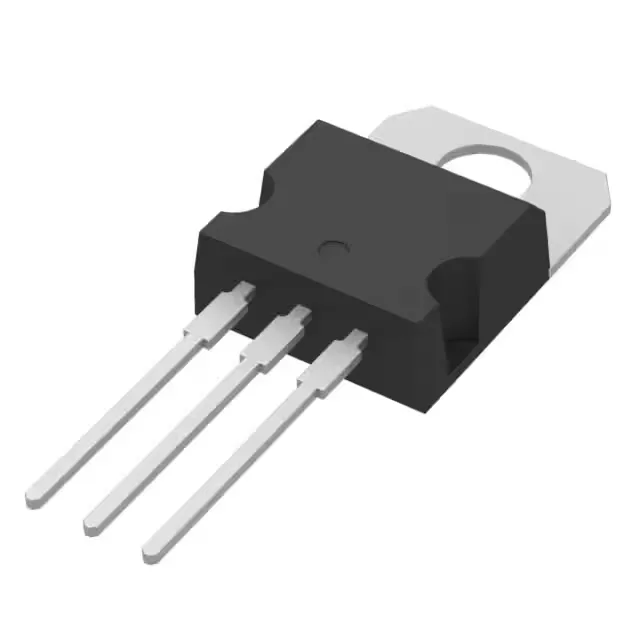
It is designed for phase-control and AC-switching applications such as motor speed controllers, heater controls, lighting dimmers, and AC/DC power supplies where a medium-current thyristor handles the main load.
Ratings that decide the fit
The 600 V off-state voltage covers 230 VAC mains with margin for line transients — suitable for industrial and appliance-grade equipment. The 8 A RMS continuous rating is the thermal design current; the 5 A average rating gives the DC-equivalent for heat-sink sizing in phase-angle applications. Surge capability of 100 A at 60 Hz handles the inrush from motor starting or capacitive loads — a key spec for relay-replacement or soft-start circuits where the SCR sees the full start surge. Gate trigger current of 15 mA max and hold current of 30 mA max define the drive circuit: a standard optocoupler or small-signal transistor can trigger it, but the load must draw at least 30 mA to stay latched — below that the SCR drops out at zero-cross. On-state voltage drop of 1.6 V max sets the conduction loss: at 8 A RMS that is about 13 W peak dissipation, so a heatsink is required for continuous duty above a few amps.
Temperature range and field installation
The TO-220 tab is the thermal path — bolt it to a heatsink with thermal compound for any load over 2 A continuous. Through-hole mounting means you can swap it on site with a soldering iron and a screwdriver — no hot-air station needed. The tab is the anode connection, so the heatsink must be electrically isolated or the circuit layout must account for tab voltage.