16 A RMS phase-control SCR for 600 V line
The TN1605H-6T is a standard-recovery SCR from STMicroelectronics rated for 16 A RMS on-state current at 600 V off-state blocking voltage. That 16 A RMS figure is the thermal limit for continuous conduction in a 50/60 Hz phase-control circuit — the part can carry a 10 A average current indefinitely when properly heatsunk, but the RMS rating governs the I²T heating in the junction for non-sinusoidal waveforms like those from a phase-fired controller. The 153 A non-repetitive surge capability at 60 Hz means this SCR survives the inrush from a motor start or a capacitive load charging event — the junction temperature spikes above the steady-state limit for one cycle, but the silicon die is sized to absorb that energy without failure. For a 16 A RMS device, a 153 A surge is roughly 9.5× the rated current, which is typical for a phase-control thyristor in this die size.
Gate drive and latching margins
Maximum gate trigger current is 6 mA and maximum gate trigger voltage is 1.3 V. These are the thresholds at 25°C — the actual trigger current rises at low temperature, so a gate drive circuit delivering at least 15-20 mA with a 5 V source provides cold-start margin down to -40°C. The 20 mA maximum holding current means the SCR stays latched once triggered as long as the load current stays above that level; in a highly inductive circuit with current ripple dipping near zero, a snubber across the SCR or a higher-hold-current device may be needed to prevent commutation dropout. The 1.6 V maximum on-state voltage at peak current sets the conduction loss: at 16 A RMS the dissipation is about 25 W, which demands a heatsink with a thermal resistance below 5°C/W to keep the junction under 150°C.
TO-220 package and board-level fit
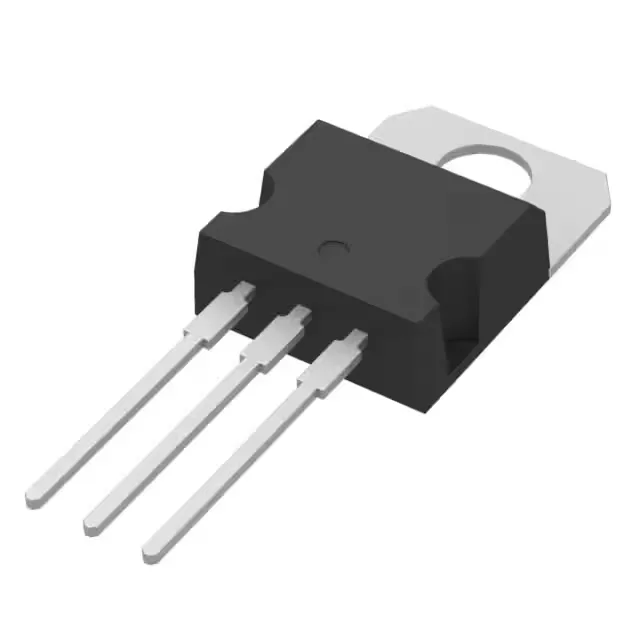
The TN1605H-6T comes in a standard TO-220-3 through-hole package, with the tab as the anode connection. The mounting hole in the tab accepts an M3 screw for mechanical retention and thermal interface to a heatsink. The lead pitch is 2.54 mm (0.100 inch) — a standard 0.100-inch grid layout works without spreading the holes. The 150°C maximum junction temperature means the thermal pad area on the PCB or the heatsink contact surface must be sized for the 25 W worst-case conduction loss. The part ships in tube packaging, which is the standard anti-static handling format for through-hole TO-220 devices. Tubes protect the leads from bending during transport and are compatible with automatic insertion equipment that feeds from a tube magazine.
Active production and compliance posture
The ROHS3 compliance covers the full substance restriction including the four phthalates, which matters for EU-market equipment subject to the 2015/863 amendment. The TN2015H-6I offers 20 A average in a different package variant (ECOPACK2), but requires a board spin for the different footprint.