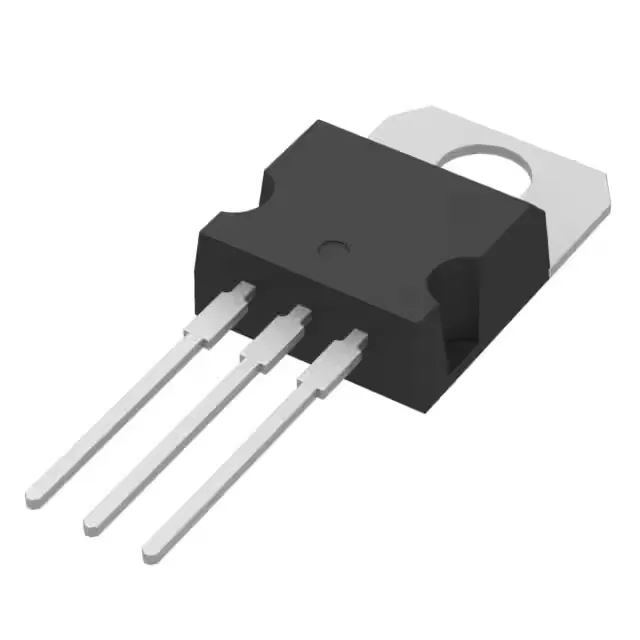
TIP42A

STMicroelectronics

TIP42A, PNP bipolar power transistor, 60 V Vceo, 6 A Ic, 2 W power dissipation, TO-220-3 through-hole package, 150°C junction temperature.

STMicroelectronics TIP42A
Download datasheet (PDF)
[IN STOCK] In Stock: 17 pcs
$0.81/ pc

Volume pricing

Buy Now

MOQ 1 · Tube · RoHS · EIA-481 · DAP/DDP · T/T

Technical specifications

TIP42A specifications
Parameter / AttributeSpecification / Value
MountingThrough Hole
FET typePNP
Voltage - collector emitter breakdown60 V
Current - collector (Ic)6 A
Current - collector cutoff700µA
DC current gain (hFE) (Min) @ ic, vce15 @ 3A, 4V
Power - max2 W
Operating temperature150°C (TJ)
PackageTube
CaseTO-220-3
Vce saturation (Max) @ ib, ic1.5V @ 600mA, 6A
100% Footprint Match · Solder-Ready (No PCB Redesign Needed)

Need Stock or a Drop-in Second-Source for TIP42A?

Package: TO-220AB · Pin-compatible replacements with immediate Shenzhen spot stock

Footprint Match 98%
Supply Chain & Allocation Reality:

The TIP41C / TIP42C pair is the general-purpose linear and switching workhorse of a generation of amplifiers, regulators and drive stages - the TO-220 answer to the classic 2N3055, with a tenth of the base drive requirements of the Darlington family and a real gain that has to be respected. The repairs that go wrong on this pair go wrong in three ways: fitted as an upgrade for a Darlington position (the base drive disappears), gain group swapped without checking (hFE 15 to 75 is a wide field), and the 2N3055 antique traded in without doing the mechanical and voltage arithmetic of the TO-3-to-TO-220 move.

Verified Pin-Compatible Replacements (3 verified alternatives)

TIP42C STMicroelectronics / onsemi TO-220AB
100% Drop-in (Zero Code Change)
Availability & Target Pricing:

The PNP Half of the Pair

Shenzhen Spot Stock (24-48h Dispatch)

Electrical & Core Specs:

The PNP complement: -100V / -6A with the same gain window (hFE 15-75), the same 1.5V saturation class at 6A and the same 65W body.

VCEO -100V; the A/B/C suffix ladder is the same (60 / 80 / 100V).

Compatibility & Drop-In Notes: Polarity, not substitution. In complementary stages keep both halves from one gain group and lot; the hFE range spans a factor of five and the wrong pairing shows as crossover distortion.
Package & Solder Footprint: Same TO-220 body, pin order B / C (tab) / E.
Shenzhen Warehouse Stock & MOQ: Stocked as a set with the NPN half.
MJE3055T onsemi (Motorola line) TO-220AB
Functional Equivalent
Availability & Target Pricing:

The 2N3055 Modernized into TO-220

Shenzhen Spot Stock (24-48h Dispatch)

Electrical & Core Specs:

The 2N3055 die family in the TO-220 plastic body: 60V-class NPN rated 10A, substantially more current than the TIP41C with less voltage margin.

VCEO 60V class against the TIP41C 100V - check the rail before going this direction.

Compatibility & Drop-In Notes: Different gain behavior from the TIP41C: check the base drive against the hFE window, and remember the package change is mechanical first - the pin layout differs from the TO-3 the original may have been.
Package & Solder Footprint: TO-220 B / C / E arrangement; mounting and insulator planning differs from either the TIP41C position (same body, different ratings) or a TO-3 socket (different body entirely).
Shenzhen Warehouse Stock & MOQ: Active onsemi line; steady supply for legacy repairs.
2N3055 onsemi / STMicroelectronics TO-3 (metal can)
Functional Equivalent
Availability & Target Pricing:

The Antique Original - Do the Arithmetic

Shenzhen Spot Stock (24-48h Dispatch)

Electrical & Core Specs:

The 60V / 15A / 115W legend in the TO-3 can: more current and dissipation than the TIP41C, less voltage, and a completely different mounting world.

VCEO 60V; the classic linear-supply rating, never intended for mains-derived rails.

Compatibility & Drop-In Notes: The substitution direction matters: the TIP41C stands in for a 2N3055 only in loads at or below 6A and 100V-class circuits; the 2N3055 replaces a TIP41C only with the TO-3 mounting (socket and mica kit) restored and the lower voltage accepted.
Package & Solder Footprint: TO-3 socket and heatsink interface - a mechanical project, not a lead swap, in either direction.
Shenzhen Warehouse Stock & MOQ: Stocked genuine and second-source; the market carries relabeled dies given the part is fifty years famous.
Buyer & Quality Checklist for Sourcing Alternatives
  • Respect the gain: hFE spans 15 to 75. At the 15 floor, 6A of collector current needs about 400mA of base current - if the original circuit was designed around a Darlington (hFE over 1000) or a MOSFET, this part never saturates and dies warm. The Darlington-to-TIP41 direction is a redesign, not a swap.
  • VCE(sat) 1.5V at 6A: about 9W inside the package at rated current. The 65W body rating assumes a real heatsink; the TIP41C is not a heat-free upgrade over any low-saturation part.
  • The suffix is the voltage: TIP41A/B/C = 60/80/100V. The pair rule: replace NPN and PNP together (TIP41C with TIP42C) from one gain group for complementary stages.
  • fT about 3MHz: linear and low-frequency switching only. In switching duty above tens of kHz the losses are the price of the old design - the modern move is a MOSFET (see the IRF540N page for the drive arithmetic).
  • The TO-220 tab is the collector in both the pair and the TO-220 3055 - insulate against grounded heatsinks.
  • For a real 2N3055 position, decide with the socket: restoring a TO-3 is mechanical work with better thermal credibility; fitting an MJE3055T keeps the plastic mounting but accepts 60V and the different gain curves.
Frequently Asked Technical Questions

Q: What is the difference between TIP41, TIP41B and TIP41C?

A: Voltage grade: 40V (base), 80V (B) and 100V (C) with identical 6A / 65W ratings and pinout. Higher grades substitute down safely in low-voltage circuits; lower grades replace higher ones only with the real rail and transients checked.

Q: Can a TIP41C replace a 2N3055?

A: In applications at or below 6A on 100V-class circuits, electrically yes - but the mounting world changes completely (TO-220 against the TO-3 can), and the 2N3055 position usually existed for its 15A / 115W capability. Do the current and dissipation arithmetic before substituting down.

Q: Why does a TIP41C stay cold in one board and cook in another?

A: Base drive. In saturated switching the part dissipates about 1.5V times the current; under-driven (hFE 15 at 6A, mains-derived linear duty) it dissipates the whole rail difference. Verify base resistor sizing against the actual gain group before blaming the part.

Technical details

The TIP42A is a PNP bipolar power transistor in a TO-220-3 through-hole package, rated for 60 V collector-emitter breakdown and 6 A continuous collector current. The saturation voltage is 1.5 V maximum at 6 A with 600 mA of base drive. Minimum DC current gain (hFE) is 15 at 3 A collector current and 4 V Vce.

The TIP42A carries an official lifecycle status of Obsolete. For a new design, consider a modern PNP power transistor in a TO-220 package with similar voltage and current ratings — the 60 V, 6 A ceiling is a common tier, and several manufacturers offer active alternatives. The TIP42A remains a viable replacement for repair and legacy BOM lines where the original part is specified.

TO-220 package — through-hole, heatsink-ready

The TO-220-3 through-hole package allows bolting the metal tab to a heatsink with an insulating washer. The TO-220 package is hand-solderable with a standard iron — no hot-air or reflow profile needed. For a hobbyist or repair bench, this is a friendly footprint: the leads are robust, the tab gives good thermal contact to a heatsink, and you can socket it if needed.

TIP42A
[ALLOC] verified
Quote