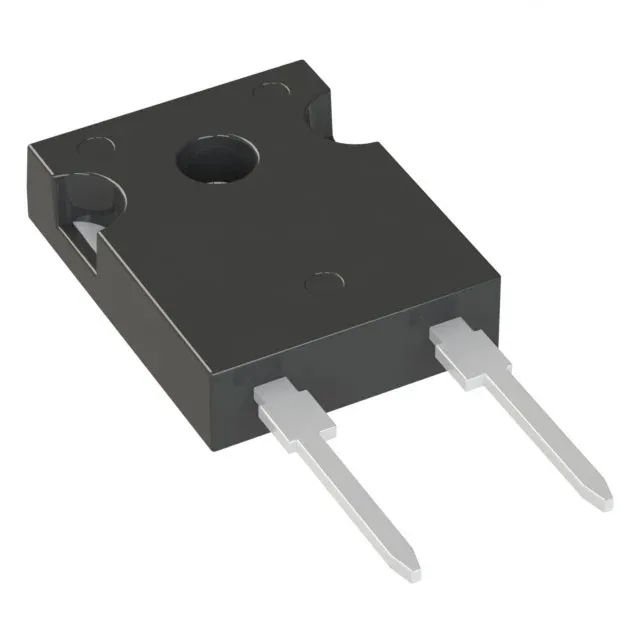
STMicroelectronics STTH80S06W — Discrete Semiconductors

ST STTH80S06W Fast Recovery Diode, 80A 600V DO-247

MPNSTTH80S06W
Obsolete

STMicroelectronics STTH80S06W, Fast Recovery Diode, 80 A average rectified, 600 V reverse voltage, 75 ns trr, DO-247-2 through hole, -40°C to 175°C junction.

Independent supplier — new & surplus stockAuthenticity-screened · ESD-safe packingListing updated Jul 2026

Specifications

STTH80S06W specifications
ParameterValue
MountingThrough Hole
Voltage - DC reverse (Vr)600 V
Voltage - forward (Vf) (Max) @ if2.2 V @ 20 A
Current - reverse leakage @ vr50 µA @ 600 V
Current - average rectified80A
Operating temperature - junction-40°C ~ 175°C
SpeedFast Recovery =< 500ns, > 200mA (Io)
PackageTube
TechnologyStandard
CaseDO-247-2 (Straight Leads)
Reverse recovery time75 ns

Product details

80 A, 600 V, 75 ns — what this diode brings to the power stage

The STTH80S06W is a fast-recovery epitaxial diode from STMicroelectronics, rated for 80 A average rectified current and 600 V reverse voltage. The 2.2 V forward drop at 20 A is a typical fast-recovery trade-off — you get the speed but pay a higher Vf than an ultrafast or Schottky alternative.

Obsolete — the sourcing reality for this line item

STMicroelectronics lists the STTH80S06W as Obsolete.

175°C junction — thermal margin for high-ambient environments

This matters for a 80 A part: at full rated current, the junction will run hot even with a good heatsink, and the 175°C ceiling gives headroom for derating in a 60°C to 85°C ambient inside a motor drive or solar inverter enclosure. The 50 µA reverse leakage at 600 V is a typical value at 25°C; expect it to rise with temperature, so the leakage power contribution should be factored into the thermal model at high junction temperatures.

Frequently asked questions

Can I use STTH80S06W in a 600V circuit?

Yes. The STTH80S06W is rated for 600 V DC reverse voltage (Vr max), making it suitable for 400 V bus rails, PFC stages, and other 600 V class power circuits. The 75 ns trr keeps switching losses manageable at typical hard-switched frequencies.