30 ns trr — what the recovery speed means for the switching loop
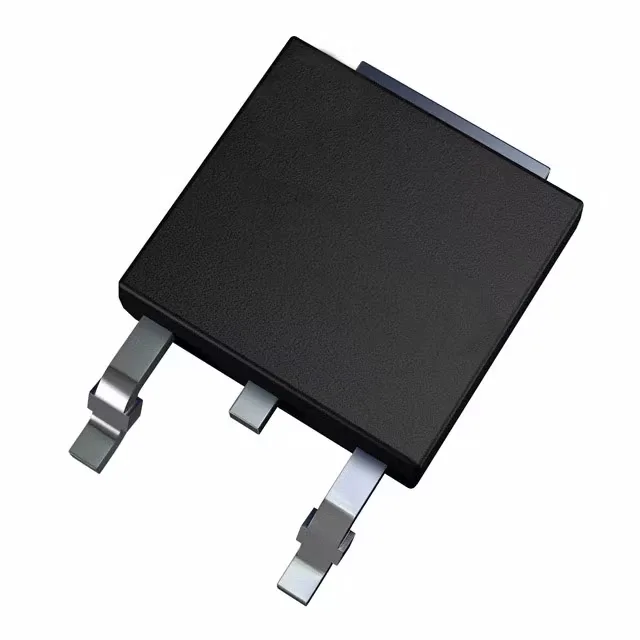
The STTH802BY-TR: The reverse recovery time is 30 ns at rated conditions, placing it in the fast-recovery class (trr under 500 ns per the speed descriptor). In a continuous-conduction boost converter or a flyback snubber, a 30 ns trr cuts the reverse-recovery charge that the upstream FET must absorb during turn-on — reducing both switching loss and ringing amplitude in the drain-source loop. Forward voltage is 1.05 V maximum at 8 A, which keeps conduction losses manageable in the DPAK's thermal budget. At 8 A average and 50% duty, the forward dissipation is roughly 4.2 W; the DPAK's exposed pad on a 1 oz copper land can handle that with junction rise held below the 175°C limit, provided the board layout includes adequate thermal vias.
Leakage and blocking — the off-state guard band
Reverse leakage is 6 µA maximum at the rated 200 V blocking voltage. In a 12 V automotive rail with a 60 V load-dump transient, the 200 V Vr rating gives a 3.3× margin above the worst-case clamp — the diode stays well within its blocking capability without derating.