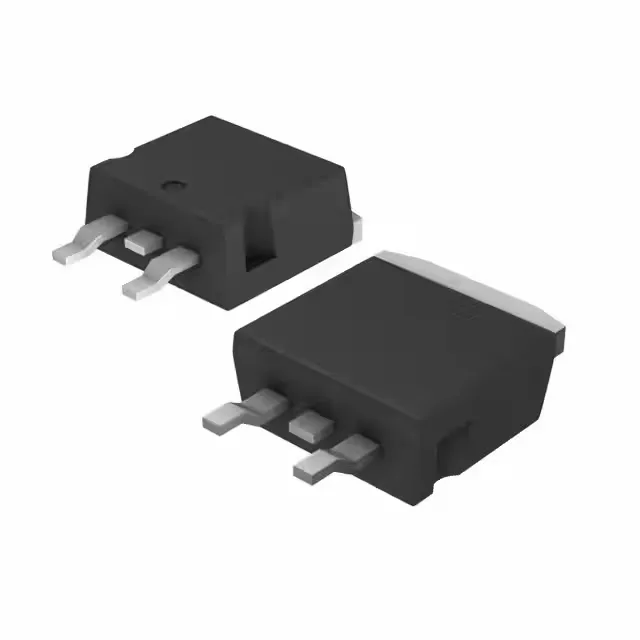
STMicroelectronics STTH30R04G — Discrete Semiconductors

STTH30R04G 30 A 400 V Fast Recovery Diode, 100 ns trr, D2PAK

MPNSTTH30R04G
Active

STMicroelectronics STTH30R04G, fast recovery diode, 30 A average rectified, 400 V reverse voltage, 100 ns trr, D2PAK surface-mount, -40 to 175 °C junction.

$2.9900Ref. price · indicative, final on quote
Sourced new & surplus through independent channelsAuthenticity-screened · ESD-safe packingListing updated Aug 2026

Specifications

STTH30R04G specifications
ParameterValue
Diode typeStandard
MountingSurface Mount
Voltage - DC reverse (Vr)400 V
Voltage - forward (Vf) (Max) @ if1.45 V @ 30 A
Current - reverse leakage @ vr15 µA @ 400 V
Current - average rectified30A
Operating temperature - junction-40°C~175°C
SpeedFast Recovery =< 500ns, > 200mA (Io)
PackageTube
CaseTO-263-3, D²Pak (2 Leads + Tab), TO-263AB
Reverse recovery time100 ns

Product details

The STTH30R04G is a 30 A average, 400 V reverse-voltage fast recovery diode from STMicroelectronics, built for continuous-current boost, PFC, and output rectification stages where recovery speed dictates switching loss. The 100 ns trr (reverse recovery time) keeps the turn-off loss low enough to run switching frequencies in the 50–150 kHz range without thermally overrunning the junction. At 30 A forward current the forward voltage drop is 1.45 V max — that conduction loss at full load sets the heatsink requirement.

D2PAK footprint — board-level thermal management

The D2PAK (TO-263) surface-mount package has a large copper tab that is the cathode connection. The package ships in Tube form, not Tape & Reel, so if your pick-and-place line expects reel feed, confirm the tube-to-reel transfer or order a reel variant.

The reverse leakage is 15 µA at 400 V — a low enough number to avoid standby-power penalties in off-line supplies.

Frequently asked questions

What is the reverse recovery time of STTH30R04G?

The reverse recovery time (trr) is 100 ns, which qualifies it as a fast recovery diode (≤500 ns at >200 mA) and suits it for switching frequencies up to around 150 kHz in hard-switched topologies.