27 ns trr — the switching-loss number that matters
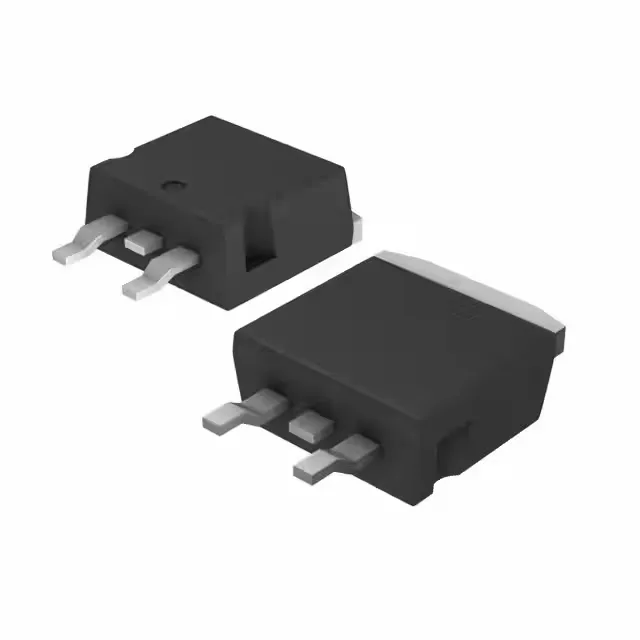
Its 27 ns reverse recovery time (trr) is the headline switching parameter — that figure determines how much energy is lost per cycle in a continuous-conduction boost stage or a half-bridge rectifier. Forward voltage sits at 1.1 V max when carrying 10 A. The part is packaged in a D2PAK (TO-263-3) surface-mount case with an exposed tab for thermal management, and the junction is rated up to 175 °C.
That means STMicroelectronics has ended production — no last-time-buy window is cited in the record, so any remaining stock in the independent channel is the available supply. The 200 V / 15 A / 27 ns trr combination narrows the search to fast-recovery diodes in the same D2PAK footprint; a 200 V class part with equal or faster trr from another manufacturer is the typical cross-ship candidate.
Each of the two diodes in the common-cathode pair is rated for 15 A average rectified current. That is the DC output current the diode can sustain in a continuous-conduction boost or flyback rectifier, assuming adequate heatsinking through the D2PAK tab. The 200 V blocking voltage suits 48 V bus converters, 24 V to 72 V telecom rectifiers, and low-voltage PFC stages — but not 230 VAC offline boost designs, where 600 V rated diodes are standard. The 10 µA reverse leakage at 200 V is a room-temperature typical; expect it to rise with junction temperature, so derate the blocking margin in high-ambient enclosures.