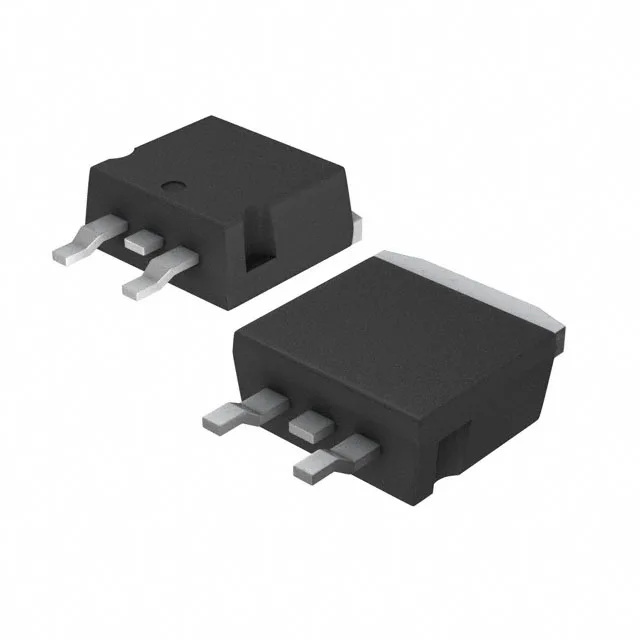
STMicroelectronics STTH16R04CG — Discrete Semiconductors

STTH16R04CG Fast Recovery Diode, 400 V, 8 A, 50 ns trr

MPNSTTH16R04CG
Obsolete

STMicroelectronics STTH16R04CG, dual common-cathode fast recovery diode, 400 V, 8 A per diode, 50 ns trr, D2PAK (TO-263AB), -40 to 175 °C junction.

$2.0300Ref. price · indicative, final on quote
Sourced new & surplus through independent channelsAuthenticity-screened · ESD-safe packingListing updated Jul 2026

Specifications

STTH16R04CG specifications
ParameterValue
MountingSurface Mount
Voltage - DC reverse (Vr)400 V
Voltage - forward (Vf) (Max) @ if1.5 V @ 8 A
Current - reverse leakage @ vr10 µA @ 400 V
Current - average rectified (Io) (per diode)8A
Operating temperature - junction-40°C ~ 175°C
SpeedFast Recovery =< 500ns, > 200mA (Io)
PackageTube
TechnologyStandard
CaseTO-263-3, D²Pak (2 Leads + Tab), TO-263AB
Diode configuration1 Pair Common Cathode
Reverse recovery time50 ns

Product details

Dual common-cathode fast recovery diode for 400 V rails

The 50 ns reverse recovery time qualifies it for continuous-conduction-mode (CCM) power factor correction and output rectification in switch-mode power supplies where recovery losses dominate the thermal budget.

50 ns trr — switching loss anchor

The 50 ns trr is specified at the test conditions typical for fast-recovery diodes in the 400 V class. In a 100 kHz boost PFC stage, the recovery charge per cycle is low enough that the diode can share the heatsink with the MOSFET without exceeding the 175 °C junction limit, provided the forward voltage drop of 1.5 V at 8 A is factored into the conduction loss calculation.

The 175 °C junction rating demands a low-thermal-resistance layout — the tab solder area and via count under the package set the continuous current ceiling, not the 8 A silicon rating alone.

Frequently asked questions

What is the reverse recovery time of STTH16R04CG?

The reverse recovery time (trr) is 50 ns, making it suitable for fast-switching applications such as PFC and output rectification in SMPS.