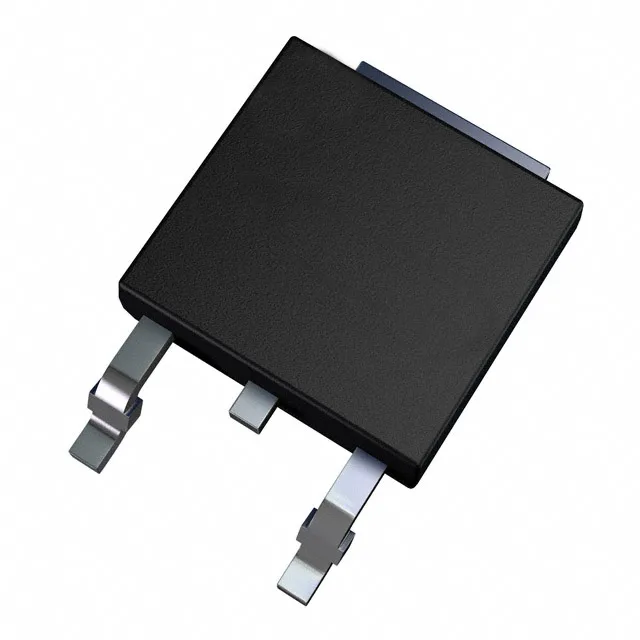
400 V, 10 A, 40 ns trr — the switching diode for PFC and SMPS
Its 40 ns reverse recovery time places it in the class of ultrafast diodes used for continuous-conduction-mode boost PFC stages, output rectification in switching supplies, and freewheeling diodes in motor-drive snubbers.
40 ns trr — where it fits in the switching loop
At 40 ns reverse recovery time, this diode recovers fast enough to keep the switching node from ringing into the MOSFET body diode in a 100 kHz hard-switched converter. The 1.7 V forward drop at 10 A is the conduction-loss number to budget for — at 10 A continuous the die dissipates 17 W, so the DPAK tab must see a low-thermal-resistance board footprint. Reverse leakage is 10 µA at 400 V, a figure that climbs with junction temperature but stays manageable below 125°C.
Obsolete — sourcing from the independent channel
The STTH10R04B is listed as obsolete. For production or repair BOMs that call out this specific diode, the supply path runs through independent distribution and surplus inventory.