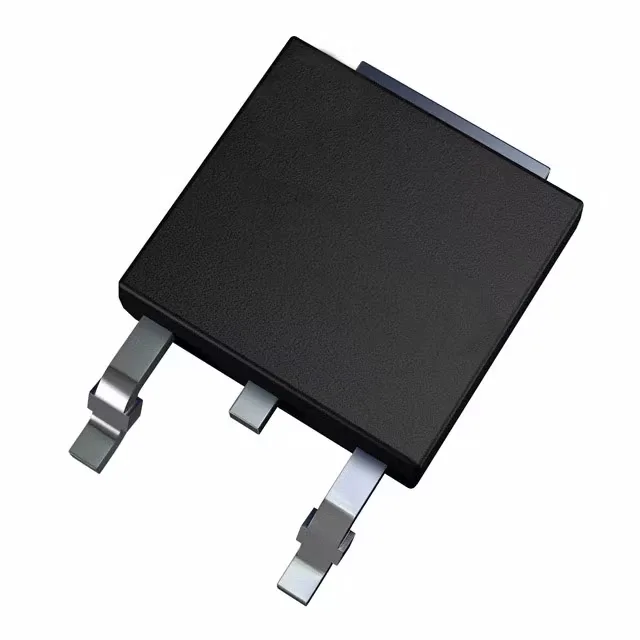
STMicroelectronics STPS5H100B-TR — Discrete Semiconductors

STPS5H100B-TR Schottky Diode, 100 V 5 A, DPAK

MPNSTPS5H100B-TR
Active

STMicroelectronics STPS5H100B-TR Schottky rectifier diode, 100 V DC reverse voltage, 5 A average rectified current, 730 mV forward voltage at 5 A, 175°C maximum junction temperature, surface-mount DPAK (TO-252) package.

$1.1500Ref. price · indicative, final on quote
Independent supplier — new & surplus stockAuthenticity-screened · ESD-safe packingListing updated Aug 2026

Specifications

STPS5H100B-TR specifications
ParameterValue
Diode typeSchottky
MountingSurface Mount
Voltage - DC reverse (Vr)100 V
Voltage - forward (Vf) (Max) @ if730 mV @ 5 A
Current - reverse leakage @ vr3.5 µA @ 100 V
Current - average rectified5A
Operating temperature - junction175°C(Max)
SpeedFast Recovery =< 500ns, > 200mA (Io)
PackageTape & Reel (TR); Cut Tape (CT)
CaseTO-252-3, DPak (2 Leads + Tab), SC-63

Product details

100 V, 5 A Schottky in DPAK — what it covers

The STMicroelectronics STPS5H100B-TR is a Schottky rectifier diode rated for 100 V DC reverse voltage and 5 A average rectified current, housed in a surface-mount DPAK (TO-252) package. Its forward voltage is 730 mV at the full 5 A load, and the junction can run up to 175°C.

Forward drop and thermal budget

At 5 A the forward drop is 730 mV, which is typical for a 100 V Schottky in this current class. The DPAK's exposed tab on the bottom side needs a decent copper area or a heatsink to keep junction temperature under the 175°C absolute maximum.

Reverse leakage at the voltage limit

Reverse leakage is specified at 3.5 µA when the full 100 V is applied. That's a room-temperature typical; leakage doubles or triples as junction temperature climbs toward 175°C, which is normal for Schottky diodes. For designs that idle at high bus voltage in hot enclosures, factor in the leakage current when sizing the bias supply or calculating standby power.

Frequently asked questions

What is the maximum junction temperature of STPS5H100B-TR?

The maximum junction temperature is 175°C, which is the absolute limit for the die. Continuous operation should stay below this with adequate thermal management.