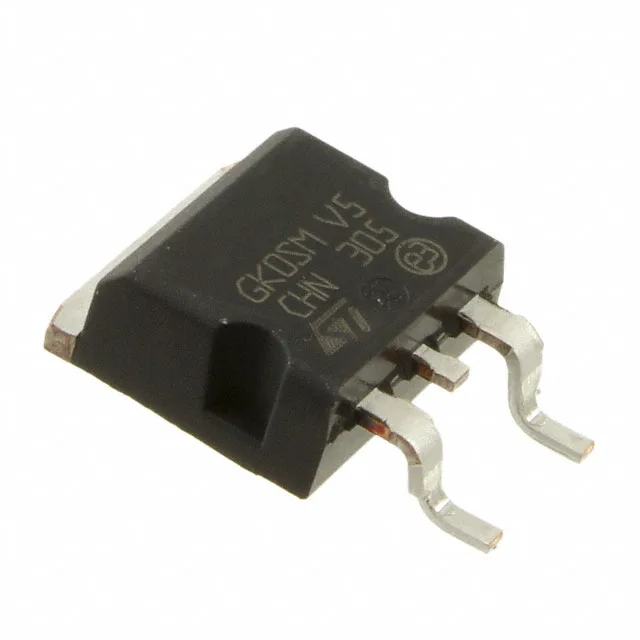
30 V, 15 A Schottky pair in D2PAK — the OR-ing and rectification workhorse
The STPS30L30CG-TR is a 30 V, 15 A Schottky diode array from STMicroelectronics, configured as a common-cathode pair in a single D2PAK (TO-263) surface-mount package. Each diode handles 15 A average rectified current with a forward drop of 460 mV at that current — the low Vf keeps conduction losses manageable in a 150 °C junction environment. Rated as Fast Recovery (≤500 ns, >200 mA), the part is suited for 50/60 Hz line rectification and low-frequency switching applications where Schottky's fast turn-off and low reverse-recovery charge matter more than ultra-high-speed commutation.
What the ratings mean for the BOM line
The 30 V reverse voltage rating is the blocking voltage — in a 12 V or 24 V rail, this provides ample margin against transients, but a 48 V bus exceeds the spec and requires the 45 V or 60 V sibling. The 15 A per-diode average current is the thermal limit under standard conditions; derate for ambient temperature above 25 °C per the datasheet curve. Reverse leakage is 1.5 mA at 60 V — a worst-case figure at elevated junction temperature. At the 30 V operating point and typical 125 °C junction, expect leakage well below this, but it still adds to the thermal budget in a high-duty OR-ing application. The common-cathode configuration means the two cathodes are tied internally — the part replaces two discrete Schottky diodes in a center-tap full-wave rectifier or an OR-ing pair, saving board space and reducing the component count.
Package and mounting — D2PAK layout notes
The D2PAK (TO-263-3) package has a large exposed copper tab on the bottom — the tab is the common cathode connection. The PCB footprint must include a thermal pad with vias to the inner copper planes to pull heat away from the junction. Solder the tab with a full paste stencil opening, not just the perimeter. The tape-and-reel packaging (TR) means the part ships on a reel for pick-and-place, with cut-tape (CT) options available for prototyping or smaller quantities.
Lifecycle and compliance — active, no obsolescence risk
The STPS30L30CG-TR carries an Active lifecycle status from STMicroelectronics — no last-time-buy, no end-of-life notice. ROHS3 compliant, so it meets the current EU restriction directive for lead and other substances. For a BOM line that needs a 30 V, 15 A Schottky pair, this part is a safe design-in choice with no planned phase-out.