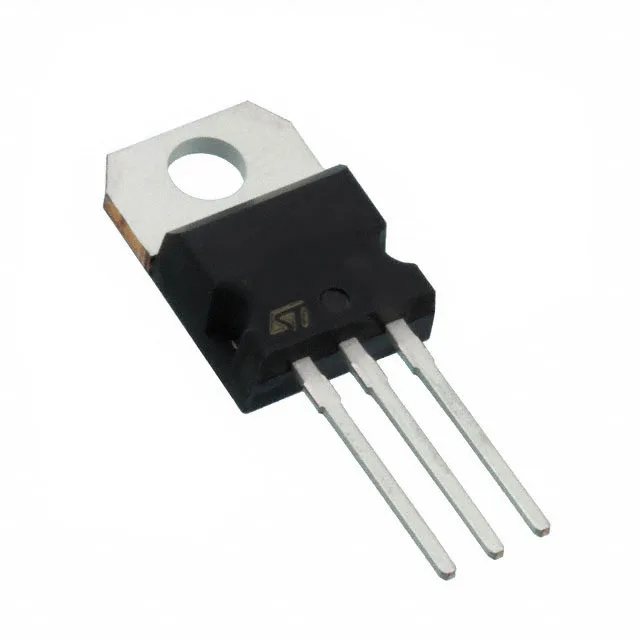
The 920 mV forward drop at 15 A is typical for a 120 V Schottky — you trade a little efficiency for the higher voltage headroom versus a 45 V or 60 V part. The fast recovery spec (≤500 ns, >200 mA) makes it suitable for high-frequency switching supplies where a standard recovery diode would burn too much reverse-recovery loss. With a 175°C maximum junction temperature, it can handle the thermal stress of a cramped power supply or motor-drive stage.
ST lists the STPS30120CTN as obsolete. For a production BOM that already uses this diode, the path is either last-time-buy inventory or a qualified second source through independent distribution. The common-cathode TO-220-3 footprint is widely used, so a pin-compatible Schottky from another manufacturer (same 120 V, 15 A per leg rating) is a realistic cross-shopping target — but you need to verify forward voltage, leakage, and thermal performance against your design margin, not just the pinout.
Reverse leakage and junction temperature — the thermal trade-off
At 120 V reverse bias, the STPS30120CTN leaks 15 µA. That is low enough for most power supplies, but at 175°C junction the leakage multiplies — budget for it in standby-power calculations if the diode runs hot. The 175°C max junction rating gives headroom over the usual 150°C limit, which helps in a TO-220 bolted to a heatsink in a forced-air chassis.