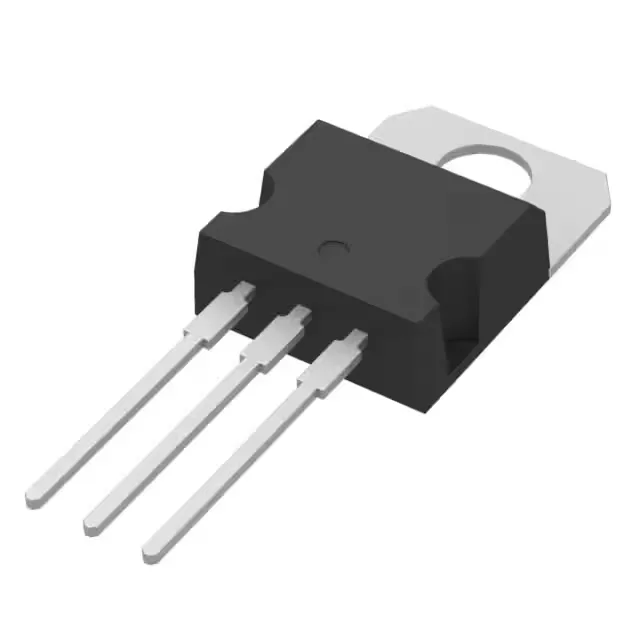
100V / 80A N-channel in a TO-220 — what you're working with
The TO-220-3 through-hole package means it bolts to a heatsink with a single screw; the tab is the drain.
Gate drive — 10 V is the floor, not a suggestion
The gate threshold voltage is spec'd at 4 V maximum with 250 µA drain current. That means a 5 V logic signal from a microcontroller or a gate driver IC might just barely get it into conduction at light load, but you won't see the full 15 mOhm RDS(on) unless you swing the gate to 10 V. The drive voltage for minimum on-resistance is explicitly 10 V. Gate charge is 182 nC at 10 V — moderate for an 80 A device. A driver with at least 1 A peak current capability will keep switching losses under control at 20 kHz to 50 kHz.
Thermal — 300 W dissipation, but only with the right heatsink
That number assumes an ideal heatsink — infinite thermal mass at 25°C. In real life, the junction-to-case thermal resistance is what matters. The TO-220 package with a greased mica washer and a decent extruded heatsink will handle 50 W to 80 W continuous without hitting the 175°C junction limit. For pulsed loads, the single-pulse avalanche energy is not in the record, so test your worst-case inductive clamp if you're running unclamped. The 175°C max junction temperature gives headroom for automotive ambient peaks.
Sourcing — active, but confirm availability before the BOM freeze
The base product number is STP80, so any future variants or package options will share that root. For a production BOM, this part is a standard catalog item available through independent distribution. No last-time-buy risk is visible today, but as with any mature STripFET II device, keep an eye on PCNs for die shrinks or fab transfers.