The 4 Ω maximum on-resistance at 600 mA and 10 V gate drive sets the conduction loss at about 1.4 W at full rated current — within the 3 W power dissipation budget at ambient, but with little headroom for elevated board temperatures without a heatsink or copper-plane thermal relief.
Gate-drive compatibility — 4.5 V threshold means 5 V logic, not 3.3 V
Maximum gate threshold voltage is 4.5 V at 50 µA drain current. That places it above the typical 3.3 V logic-high output (3.0–3.3 V), so a 3.3 V microcontroller GPIO cannot fully enhance the channel. A 5 V logic output or a dedicated gate-driver IC delivering at least 10 V is needed to reach the rated Rds(on). The gate is rated for ±30 V maximum, giving margin for overshoot in a driven half-bridge.
Switching performance — 9.5 nC gate charge keeps driver losses low
Total gate charge is 9.5 nC at 10 V, and input capacitance is 164 pF at 50 V drain-source. These numbers are low enough that a standard gate-driver IC or even a discrete transistor push-pull stage can switch this MOSFET at tens of kilohertz without excessive drive current. The low capacitance also reduces the Miller plateau duration, which helps keep switching losses in check for flyback or forward-converter primary switches.
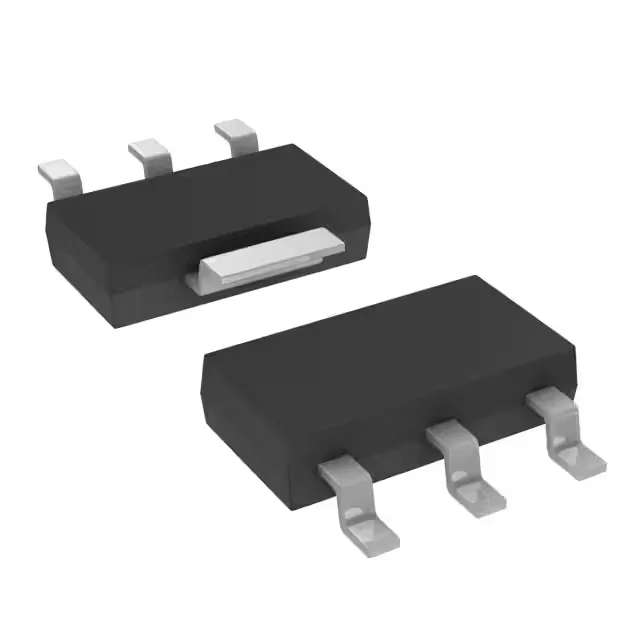
Package and thermal reality — SOT-223 needs board copper for 600 mA continuous
At 3 W maximum dissipation in still air, the junction temperature reaches 150 °C — the absolute maximum — so continuous 600 mA operation at high ambient temperature requires a well-designed copper pour on the drain tab.